How To Make Great Sweet Mixed Pickles

017Sweet Mixed Pickles  remind me of Fridays when I was a kid.  Every Friday, my Mom made grilled cheese sandwiches for our lunch and they were always served with store-bought sweet mixed pickles.  I remember the pickles tasting good, but there was often a squabble between siblings over the minimal cauliflower florets and pearl onions.  Well I’m here to tell you that there will be no fighting at this City Boy’s home between dutiful son & endearing daughter because our mixed pickles are chock full of cauliflower florets and pearl onions!  So if you are interested in making your own sweet mixed pickles, I urge you to give this recipe a try.

Makes 10 Pint (500 ml) jars.

Ingredients:

6 lbs.. pickling cucumbers (4 quarts/approx. 40 pickling cucumbers)

2 lbs. pearl onions (5 cups), outer skin removed

1 cauliflower head

1 cup  pickling salt (Don’t use table salt.  It will cloud your liquid and turn your pickles to an unpleasant color.)

16 cups cold water

3 1/2 cups pickling vinegar

2  1/4 cups granulated sugar

1 tbsp.  mustard seed

1 tsp. celery seed

1/2  tsp. turmeric

Directions:

Add pickling salt to the water and stir until dissolved in a large bowl.  This may take a bit of stirring because the salt will not dissolve as readily in cold water.

001

Weigh, wash and gently scrub all cucumbers.  Discard any cucumbers that appear spoiled.
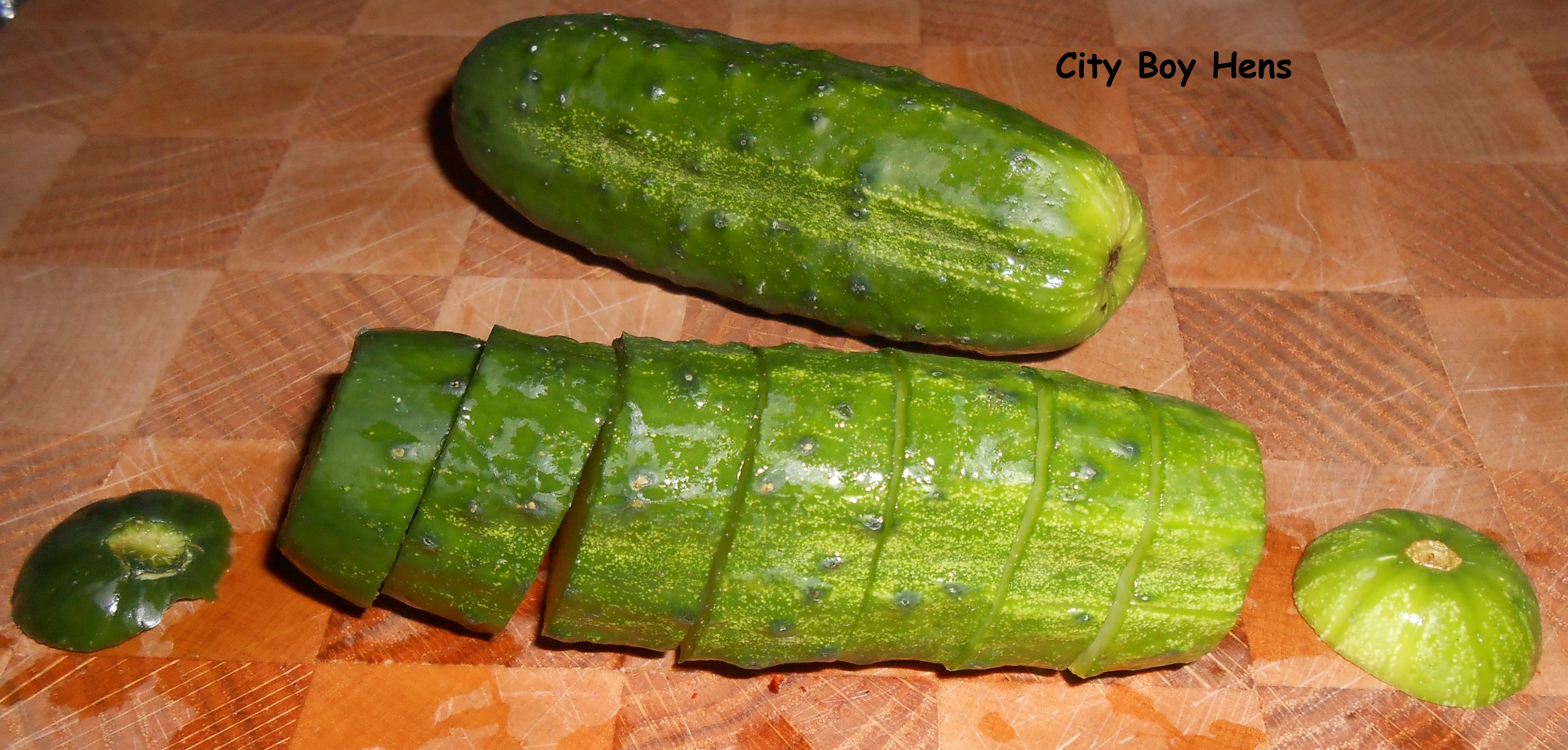
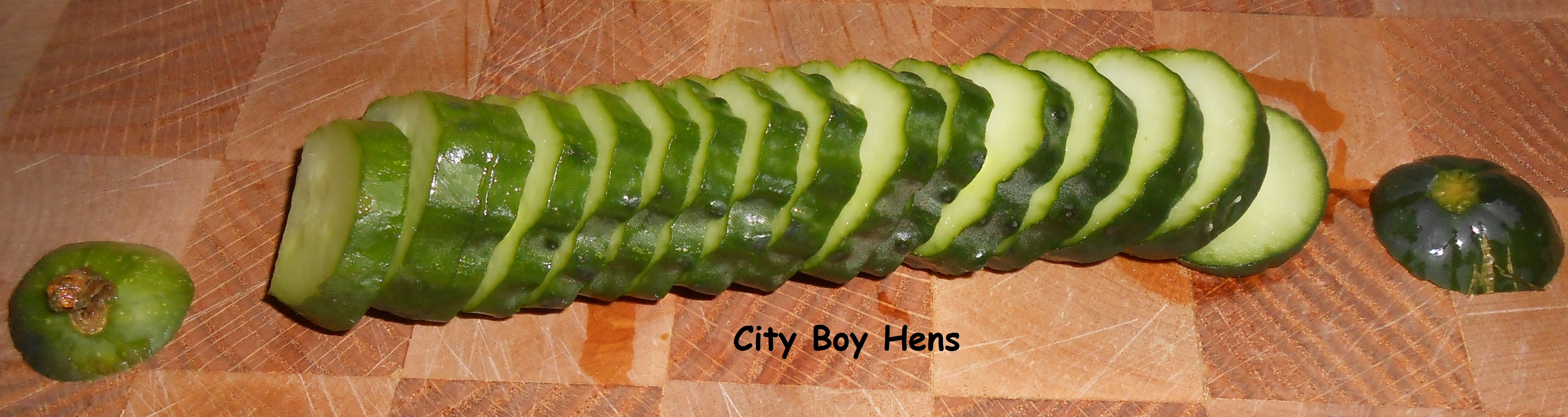
004Cut approximately 1/4″ off of each end of the cucumber.  It is essential that you at least cut  the blossom end (not stem) because there is an enzyme at this end which will make your pickles turn mushy and possibly unsafe to eat.  The blossom end is located on the right side in the above picture.

Cut your cucumbers into 1/2″ slices and place them in the large bowl.

Rinse pearl onions and soak them in hot water.  This will help loosen the outer layer that must be removed on the  onion.  I know this is a huge pain in the butt, but it will be worth it in the end!  Remember…no more fighting.  Place the onions in the same bowl.

Wash and cut the cauliflower into small florets.  This too must go into the really large bowl.006
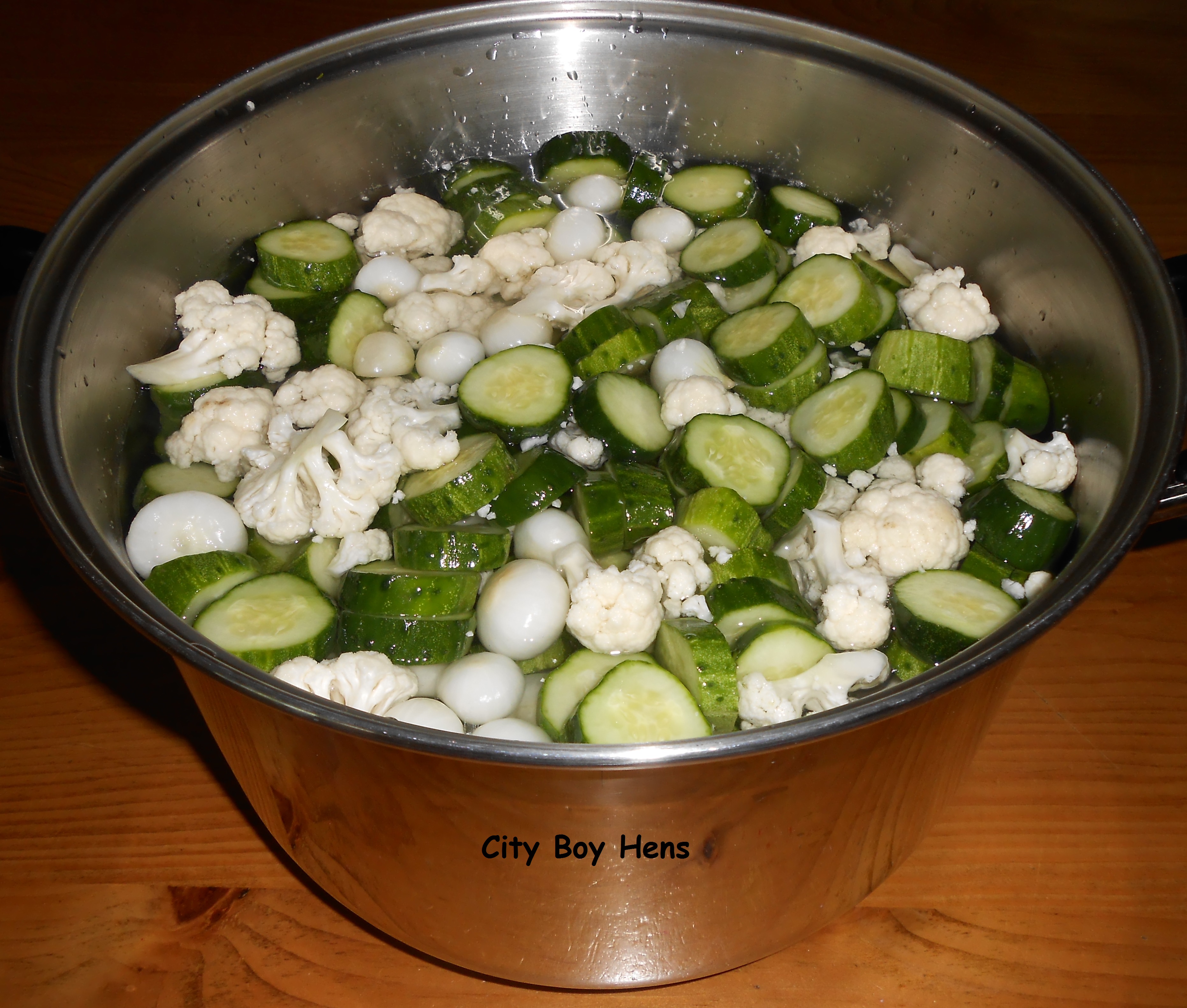
Keep the vegetables in the brine for 2-3 hours, occasionally giving it a stir.

With about a half an hour left of brining, fill your canner up with water about 2 inches higher than the height of your jars and bring the water to a boil.  This will take a bit of time.

Sterilize your jars in the oven at 225 degrees Fahrenheit  for 10 minutes and continue to keep them warm in the oven until they are needed.003

Place canning seals and rings in a small pot and begin to warm them up.005

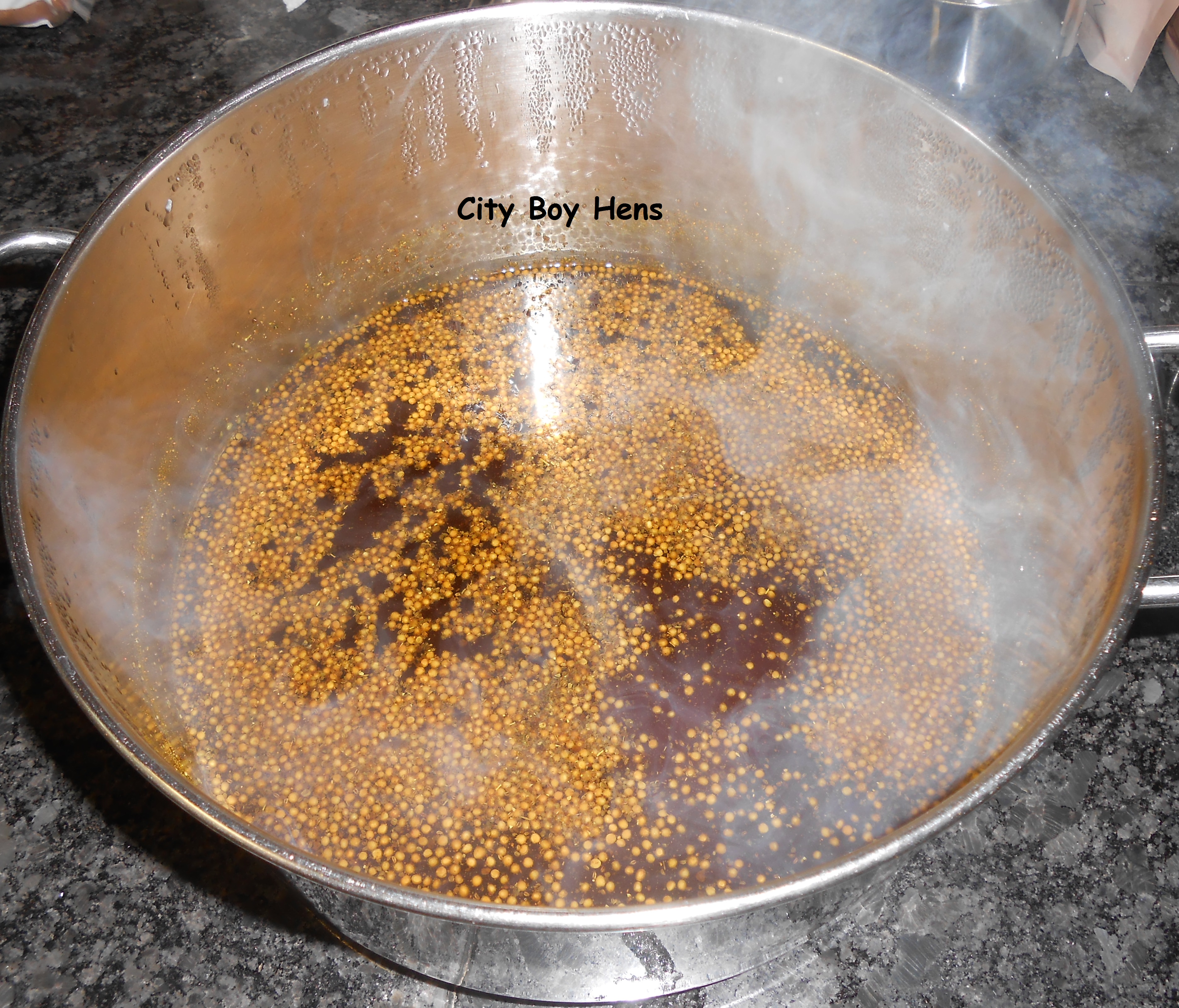
In the mean time, combine sugar and vinegar in a large pot and bring to a boil.

Place spices into a piece of cheese cloth and tie.  Place this bag in the liquid when it begins to boil.

Once the 2-3 hours of brining is complete, drain the vegetables into a colander.  Fill the bowl with fresh water and rinse again.

Put the drained vegetables into your large simmering pot and bring the ingredients up to a boil.014
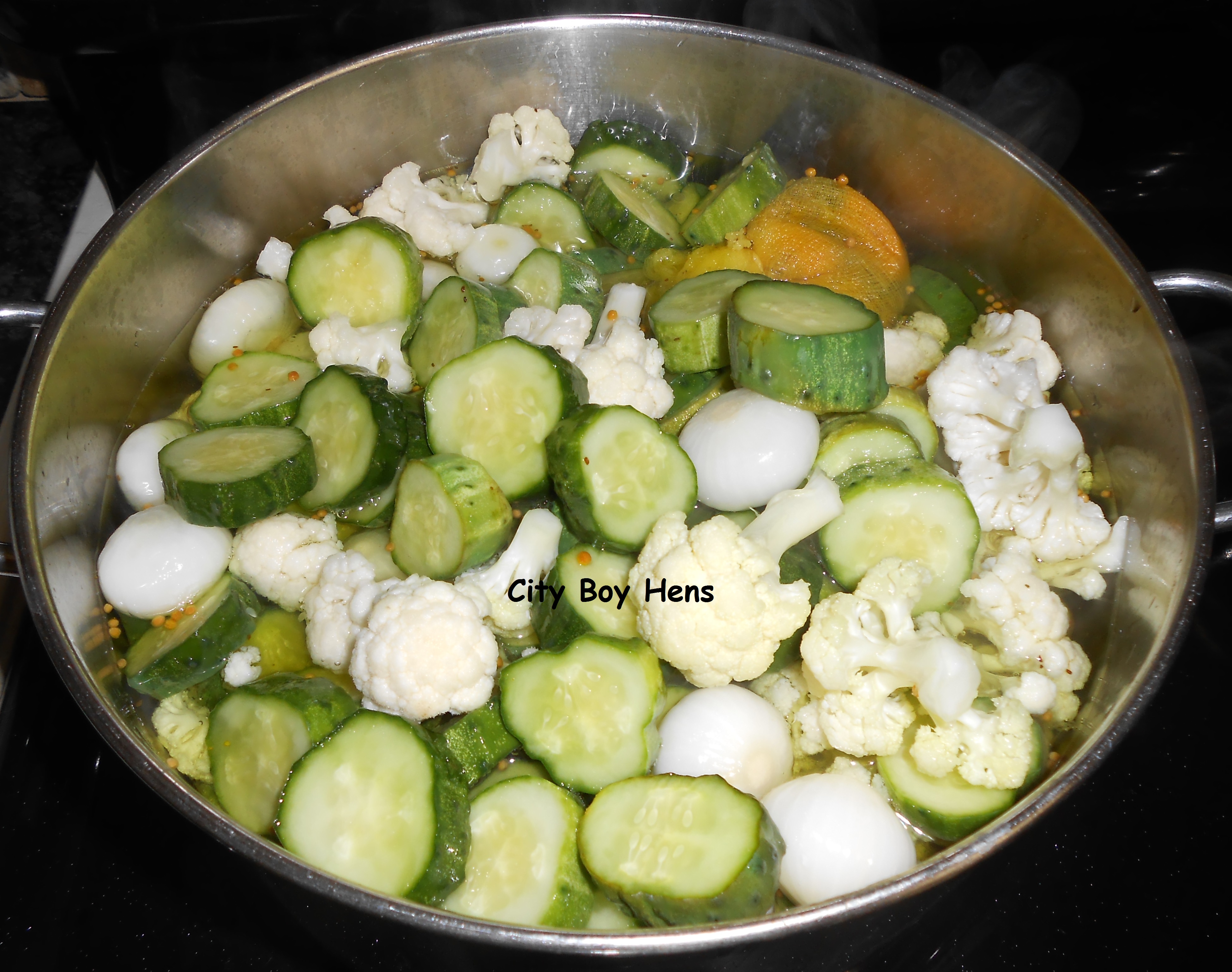
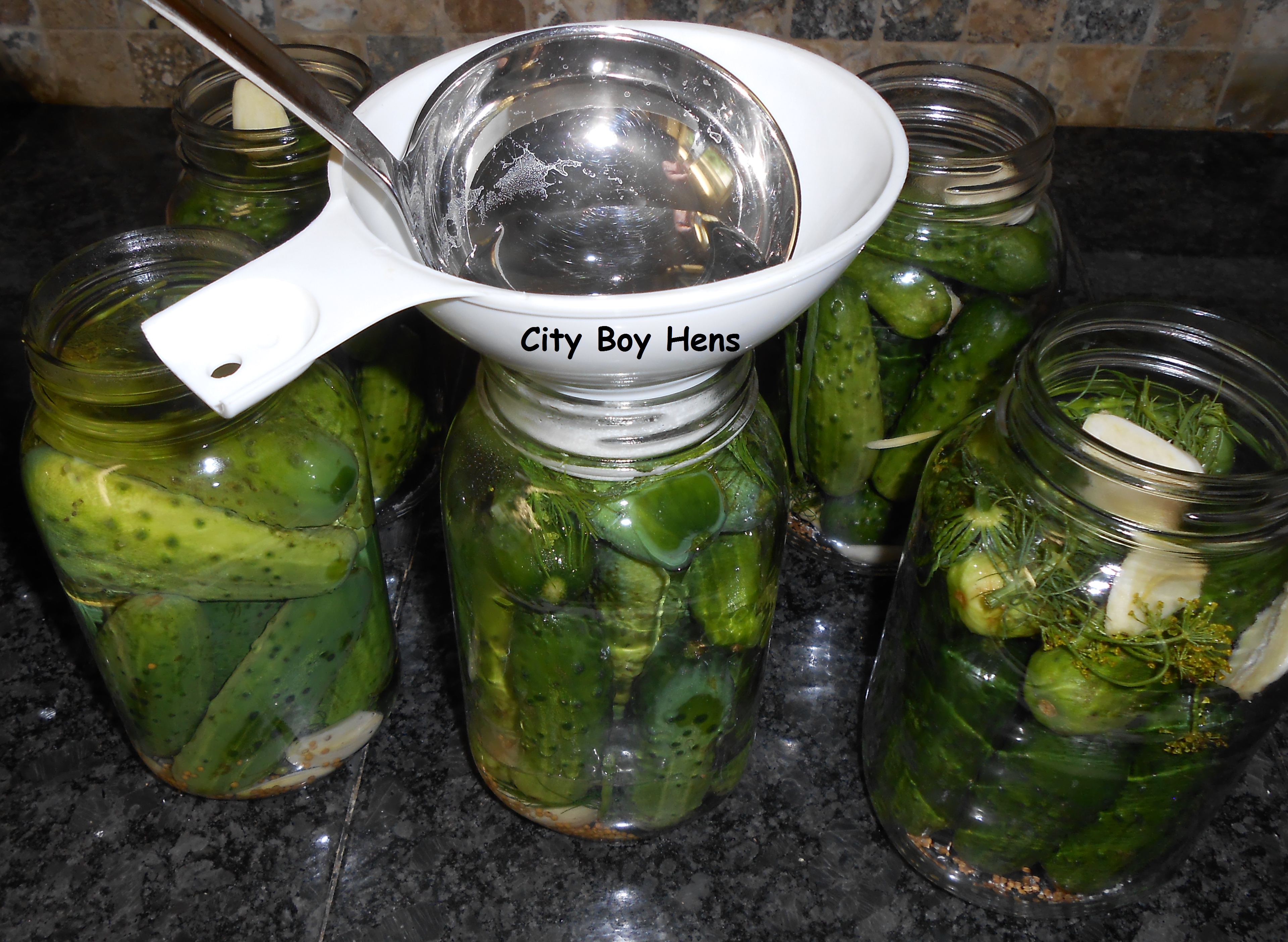
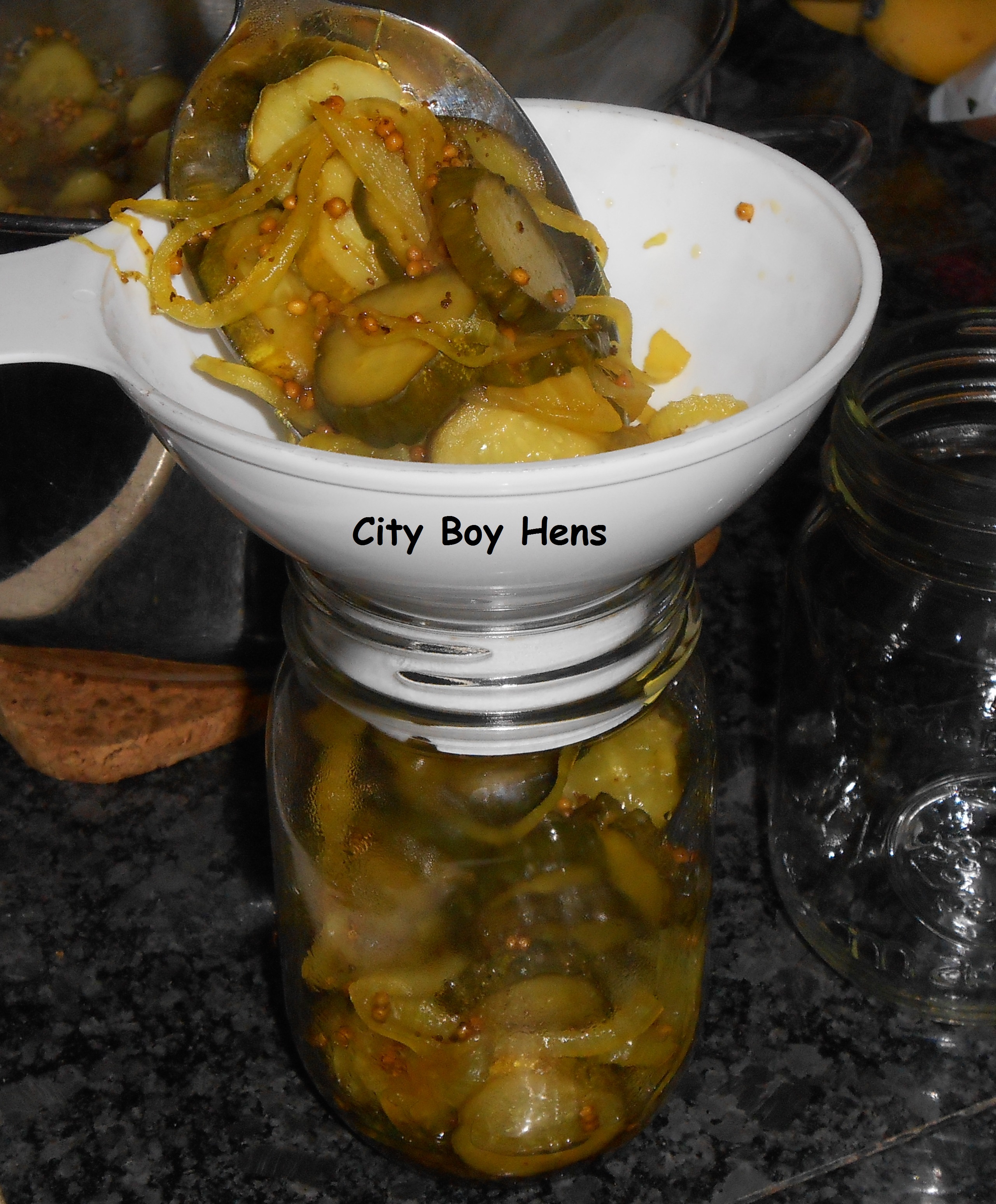
Using a canning funnel, pack your mixture into your canning jars, leaving 1/2″ head space.  I found it easier to fill all the jars first with the “solids” and then distribute the liquid after.016

Using a non-metal utensil, remove the air bubbles from the jar.  Add more liquid to the 1/2″ head space level if required.

Wipe the lip of each jar with a wet paper towel.  This will ensure that no residue is left on the lip of the jar which will prevent a good seal.

Using tongs, place your seals and rings on each jar.

Using canning tongs, carefully place each sealed jar into the canner and process in boiling water for 10 minutes.025

Using the canning tongs, carefully remove each jar from the boiling water and leave to cool on a rack.

Soon you will hear the successful ping of each jar as it seals.  Now tuck those babies away in the cantina or cold cellar until the colder months when you’ll need a reminder of the summer!  If you can’t wait until then……just give them a few weeks to flavor!017 - Copy

.

How To Make Italian Plum Jam

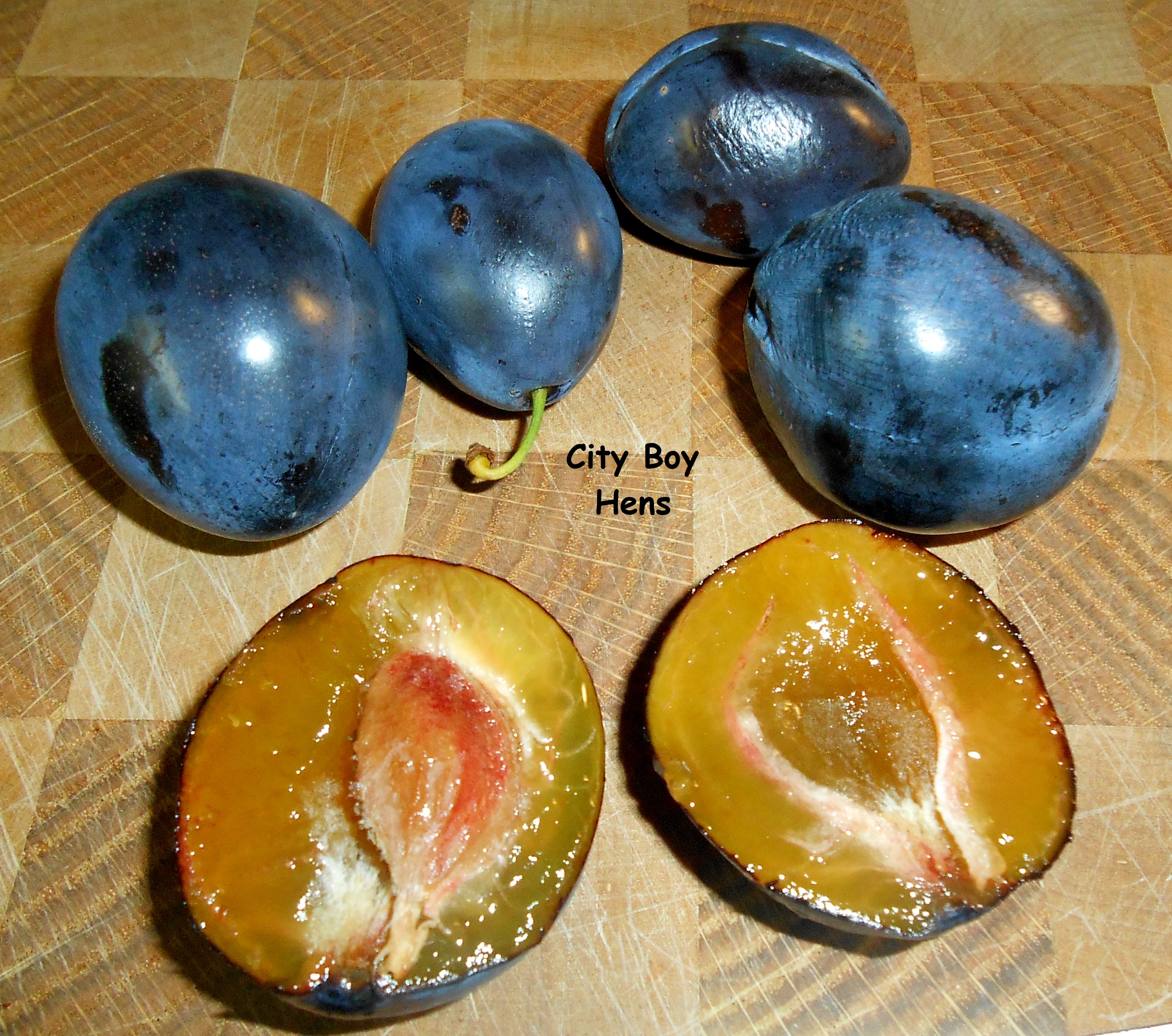
028The Italian Plum or Prunus cocomilia is native to Southern Italy.  It is said that the plum may have been one of the first fruits domesticated by humans and that it’s remnants were found in Neolithic age archaeological sites dating back 10,000 years ago.  Over the years, this ancient fruit  has been used in cakes, preserved in alcohol, dried to make prunes and……made into delicious jam.  Right now in Southern Ontario, Italian  plums are in abundance and last weekend I honored my daughter’s request and make some Italian Plum Jam.  I don’t mind saying it turned out pretty darn good!
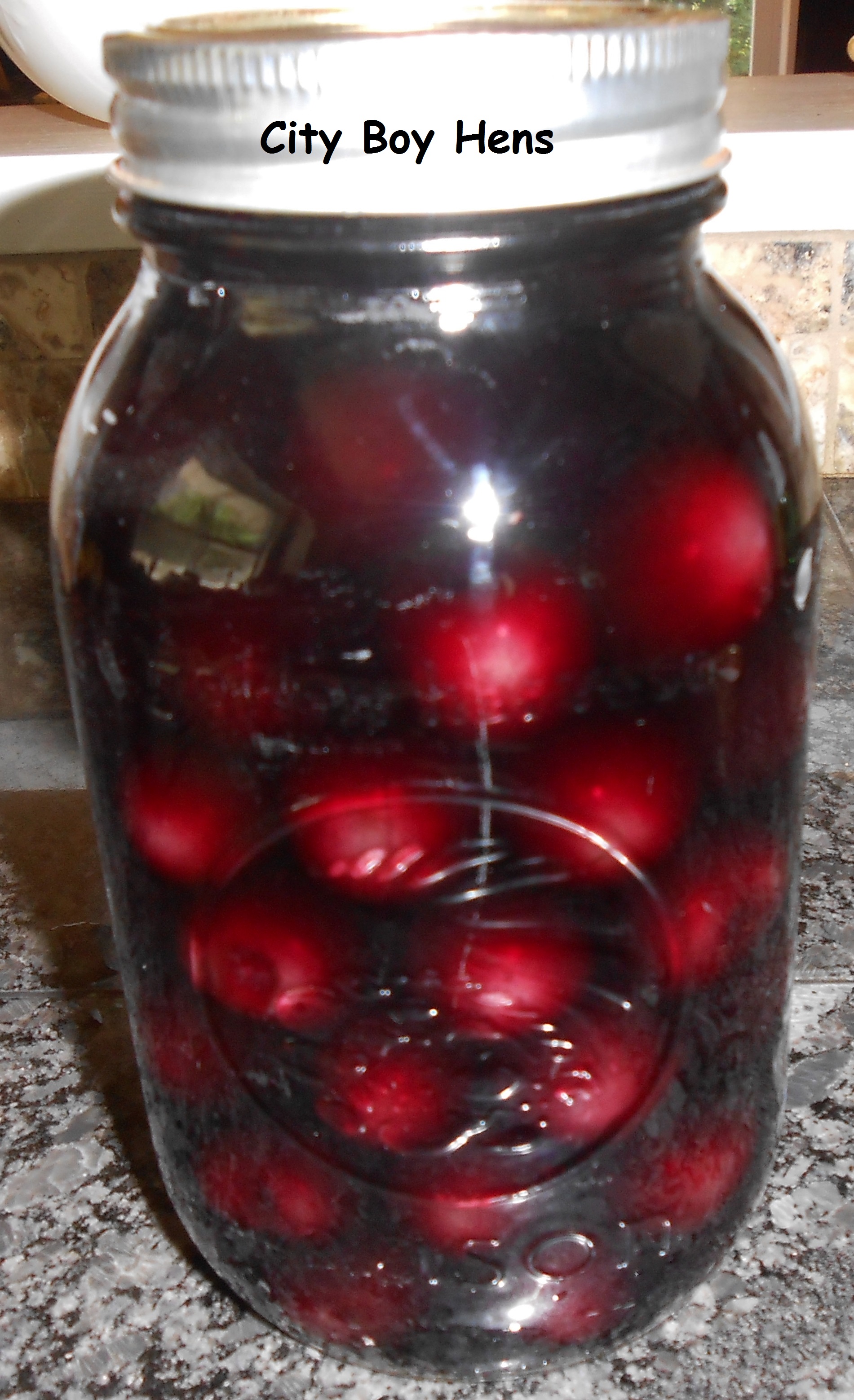
Makes 10 -250 ml (8.4 oz. or half pint) jars of jam

Ingredients:

4 lbs. of Italian plums ( 6 cups crushed)

8 cups granulated sugar

1 package of pectin (57 g /2 oz.)

Directions:

003Weigh, wash and cut plums in half.  Discard pit.

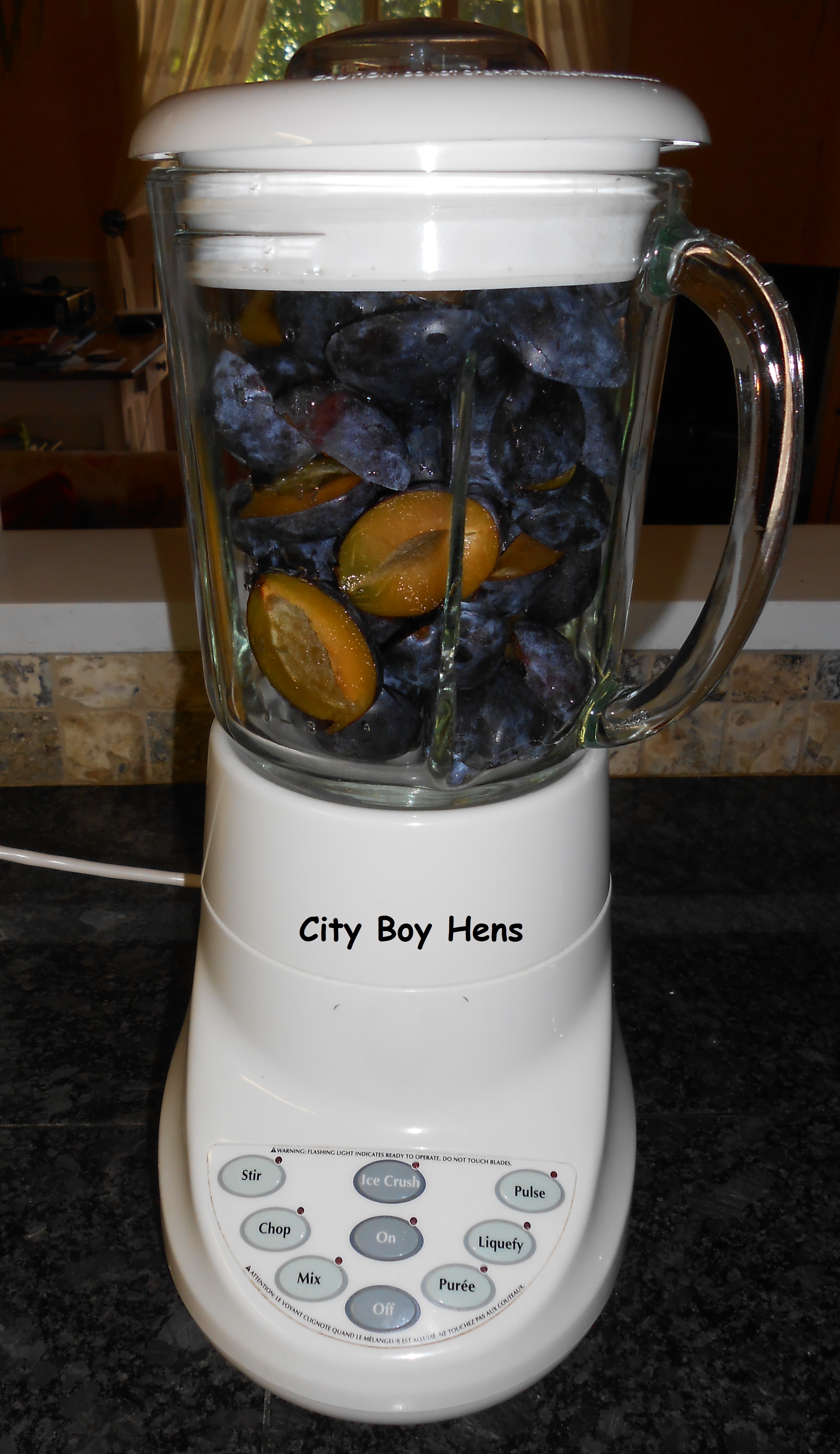
Either finely chop plums by hand or pulse in a food processor.  The second choice is much easier & faster. 005

Fill your canner up with hot water to the height of the jars that you will be using for your jam. It will take a while to get this volume to a boil so you better start now.  If you get ahead of the game, you can always turn it down later.

Fill a medium pot with water and add the seals and screw rings.  Bring this to a gentle boil.005

Sterilize your jars in the oven at 225 degrees Fahrenheit  for 10 minutes.  Continue to keep them warm in the oven until they are needed.

Combine mashed plums and pectin in a large pot and bring to a boil over high heat.012

Add all the sugar.  I add 1/3 at a time and stir in order to dissolve all the sugar and not have it stick to the bottom.

Note:  Make sure you use a LARGE pot to make this jam.  The volume will really INCREASE when the jam begins to boil.  The last thing you are going to want to happen is have this sugary mixture bubble over in the pot and catch FIRE on your burner.  Been there and done that!

Once the sugar is dissolved, return to a hard boil for 1 minute.

Remove from heat. Stir and skim for 5 minutes.  This step is crucial in order to get a foam free jam (skimming part) that doesn’t have the fruit rising to the top of the jar (stirring part).014

Pour jam into warm sterilized jars to 1/4″ from rim.018

Wipe the lip of the jar with a wet paper towel in order to ensure that no jam is on the rim of the jar.  This could prevent a good seal from happening.  Cover with sterilized lids and tighten the screw rings.

Process in a water bath for 10 minutes. Carefully remove the jars with canning tongs and cool on a rack over night.  Soon you will hear the sound of success as those lids start popping and ensuring a good seal.025

Complimenti (congratulations)!  Now tuck some of those jars into your cantina or cold cellar and wait for those cold days of Winter when you’ll need a warm reminder of some late summer tastes!025

Drunken Plums In Vodka

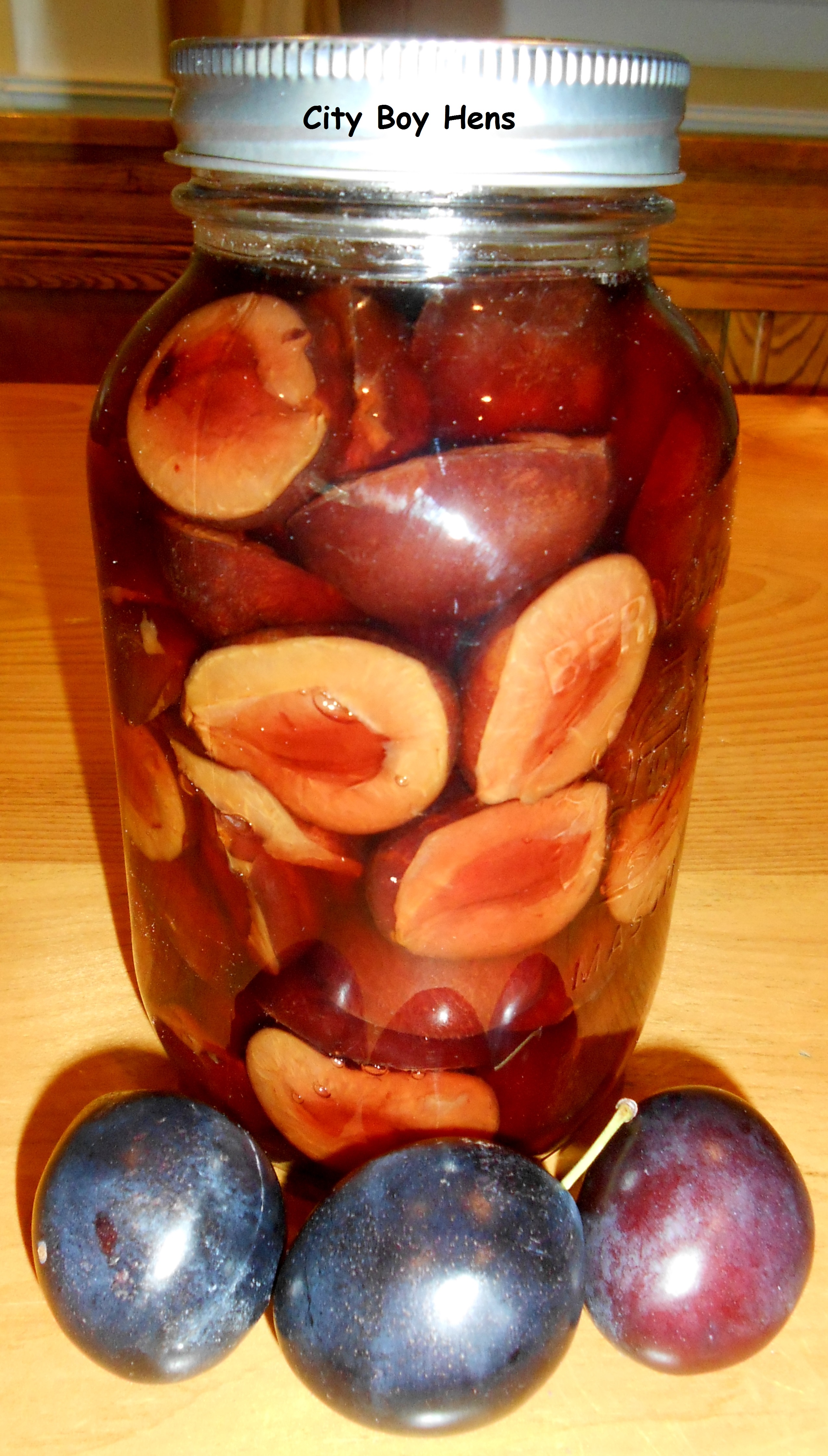
013Italian plums are at their peak of freshness in Southern Ontario.  It’s a great time to buy a basket of plums and create some late summer memories for the cold Winter ahead.  What better way to do this than make some Drunken Infused Plums In Vodka.  I’ve done this before with cherries and it is always a crowd pleaser.  I’m not sure what it is, but a lot of folks get excited about eating alcohol infused fruit.  Maybe it’s because they can combine  getting a bit  lacquered with their daily recommended serving of fruit.  “Louie……would you like an apple or banana with your lunch today?”  “Neither Maria…….I’m going over to City Boy’s house tonight and gonna’ eat some Drunken Plums”.

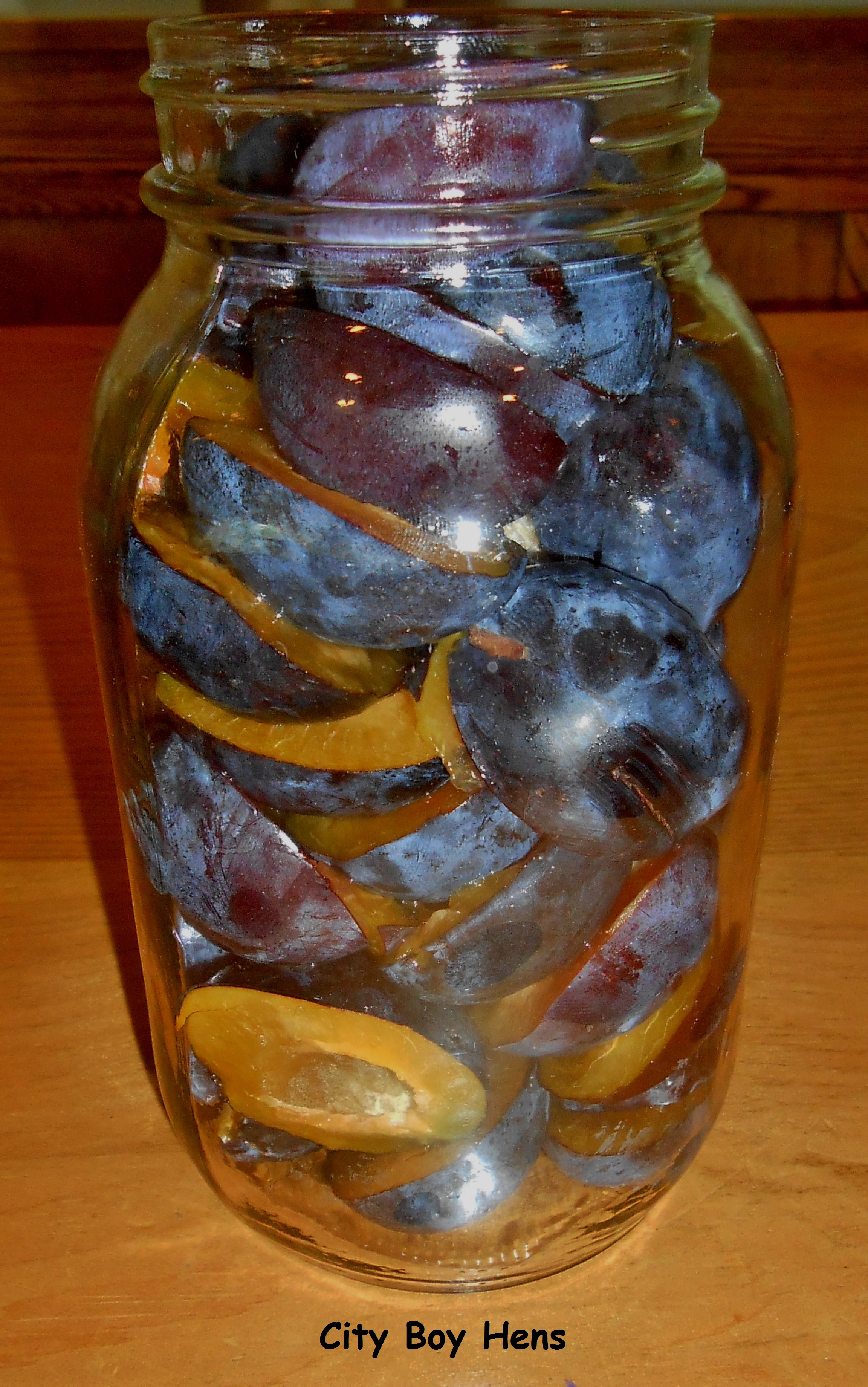
In order to make a really good vodka liqueur, it is necessary to cut the plums in half and remove the pit.  This will allow the vodka to penetrate into the fruit much faster and allow the sugars from the plums to flavor the vodka.  I promise that this liqueur is going to taste amazing!  You won’t believe how sweet it becomes after a few months in those mason jars!020

Using a canning funnel (just because it’s easier), drop your plums into a sterilized mason jar.  Make sure to pack them in tight without breaking up the plums.  You can sterilize the jar by placing it in the oven for 10 minutes at 225 degrees Fahrenheit.

Fill the jar with vodka, leaving a 1/4″ headspace and seal up the jar.036

Now, put the jar aside in your cantina or cold cellar and wait for the vodka to turn a rich amber color.  You’ve got to give those babies at least 3 months to flavor the vodka. But, don’t worry, they’ll be ready just in time for your Christmas or New Year’s celebrations!015

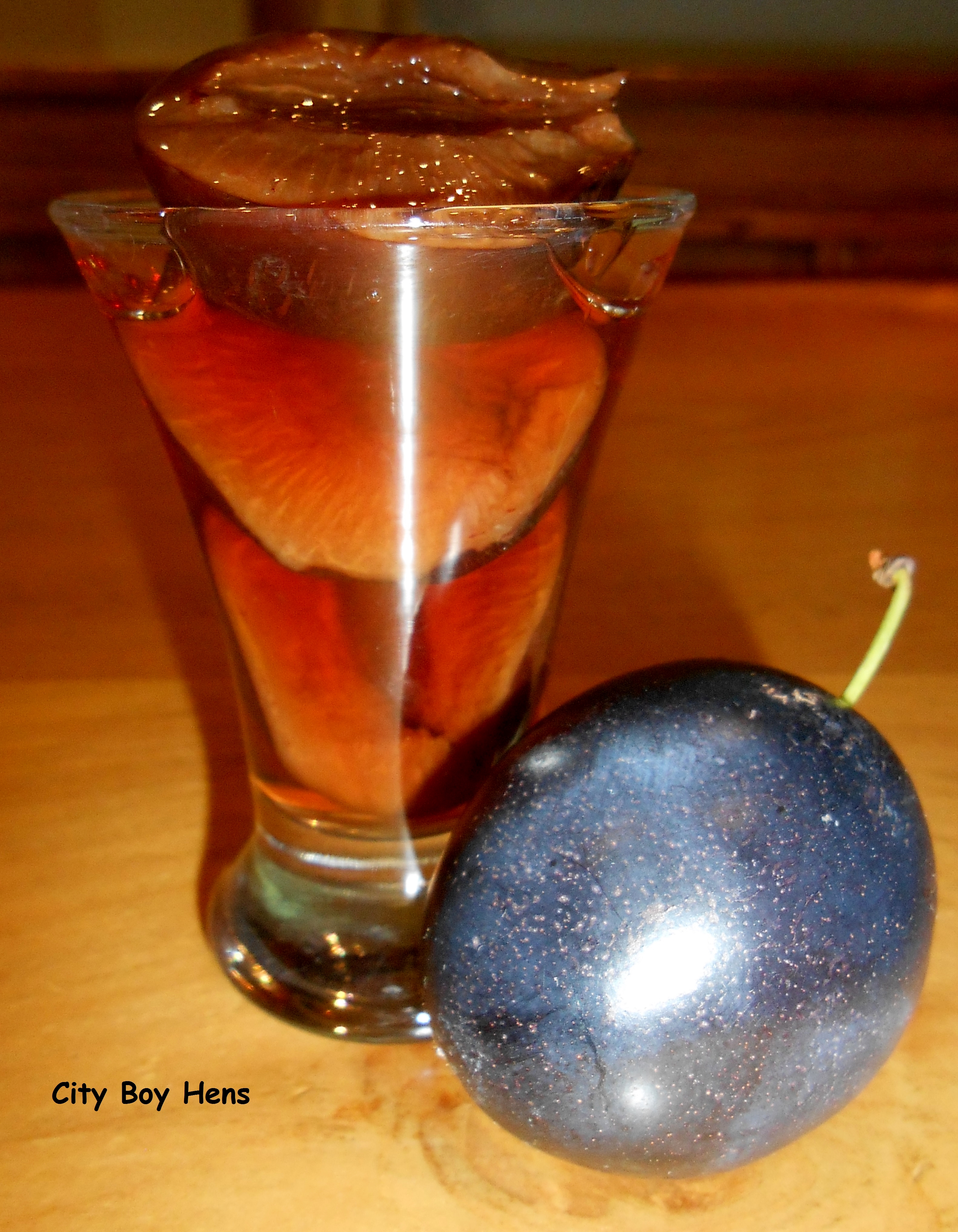
Serve 2-3 plumb halves in a liqueur glass with a toothpick.  Your family & friends are going to love them!  Enjoy responsibly!

The Crunchiest Dill Pickles Ever!

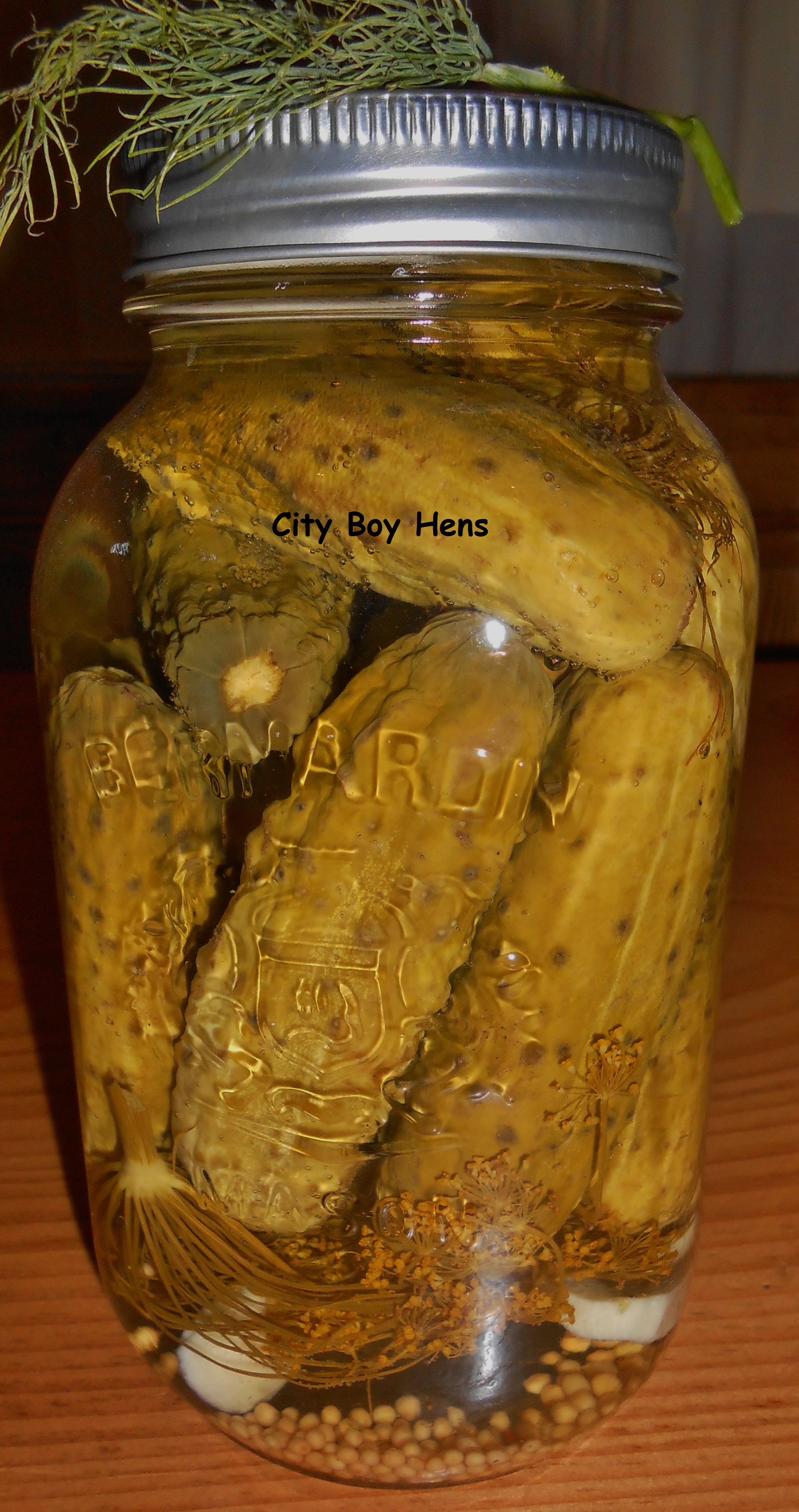
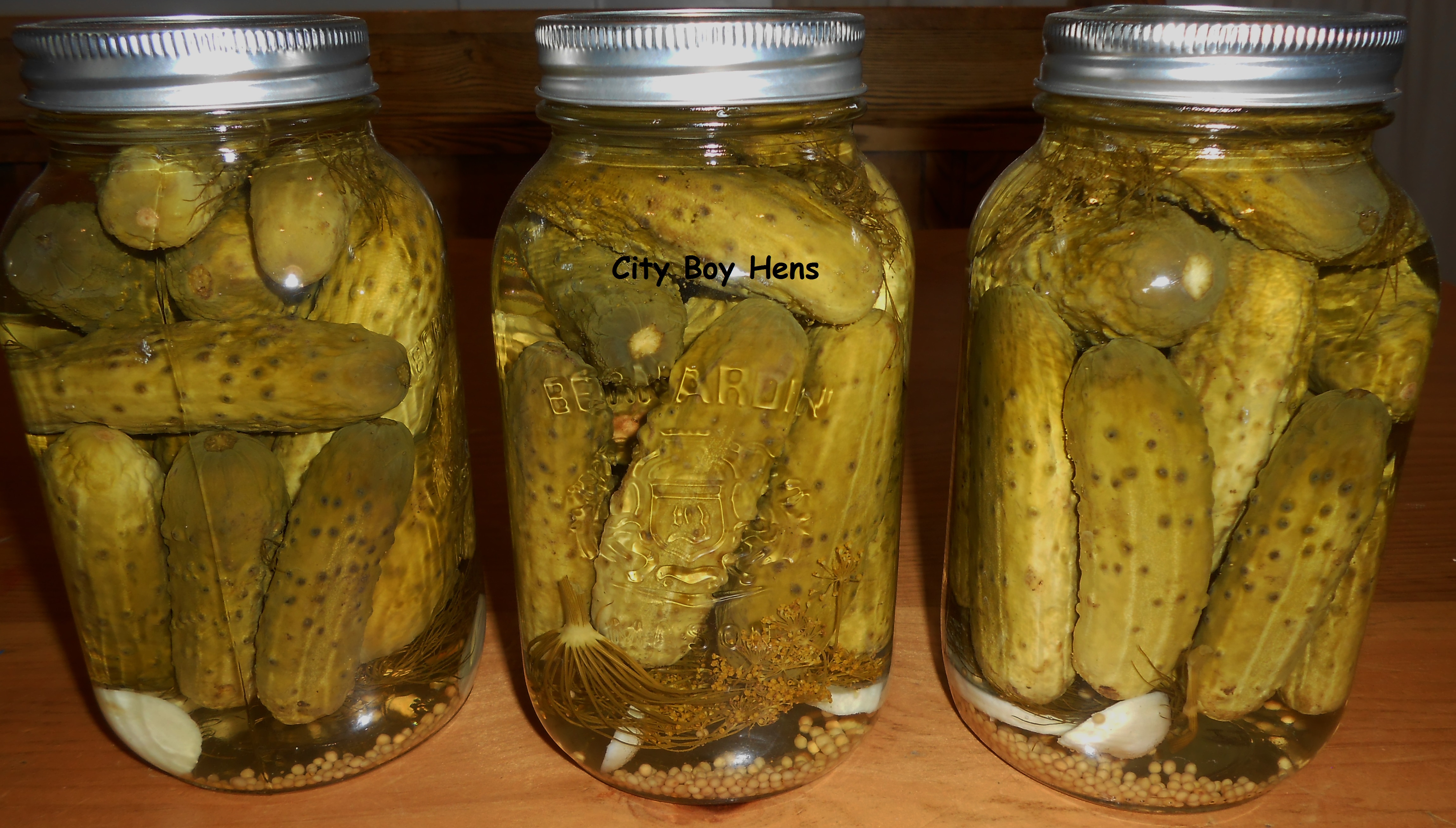
016People have been eating pickles ever since the Mesopotamians started making them way back in 2400 B.C. The pickles popularity grew over the years with notable mention from many famous people.  Cleopatra claimed that they were the secret to her beautiful skin.  Christopher Columbus ensured that his shipmates had a pickle each day in order to fend off scurvy and Napoleon believed that a pickle a day helped ensure that his troops remained strong in battle.  And then there’s CITY BOY & his family who all love eating them on burgers, wraps, or just as a plain old snack (especially daughter).

The only problem with homemade dill pickles is that they become mushy over time.  Well…..I’m here to tell you that the days of limp pickles are definitely over for this City Boy.  No more droopy, floppy, or shriveled pickles are ever found on the shelf in this City Boy’s cantina.  My beloved wife now BOASTS about the firmness, crunch and look of her City Boy pickles every time she is caught with her hand in the pickle jar!

The reason that homemade pickles generally become mushy over time is that there is an enzyme on the flowering end of the cucumber that does not get destroyed during the canning process.  As a result, it breaks down the fibers in the cucumber over time and turns it into a soft & mushy pickle within 6 months.  We are still eating Dills from 2 years ago (I went a bit crazy on the canning that year) and they still have a good crunch.  The secret is a product up in Canada called Pickle Crisp by Bernardin (Canada’s answer to USA’s Ball).  Just 1/4 teaspoon in each quart jar will keep your pickles crisp for long past a year!

Ingredients: Yields 6 quart jars

5 lbs. pickling cucumbers

8 cups water

8 cups pickling vinegar

1 cup  pickling salt (Don’t use table salt.  It will cloud your brine and turn your pickles to an unpleasant color.)

Into each jar add:

1/2 teaspoon mustard seed

1 large garlic clove (sliced)

1 bunch dill

1/4 teaspoon “pickle crisp”

Directions:

001

Weigh, wash and gently scrub cucumbers.  Discard any that appear spoiled.

Fill your canner up with water about 2 inches higher than the height of your jars and bring the water to a boil.  This will take a bit of time.

Sterilize your jars in the oven at 225 degrees Fahrenheit  for 10 minutes and continue to keep them warm in the oven until they are needed.004

Place canning seals and rings in a small pot and begin to warm them up.005

In the mean time, begin making your brine solution and bring it to a boil.

Carefully remove sterilized jars from the oven and add dill, garlic, mustard seed and pickle crisp to each jar.002

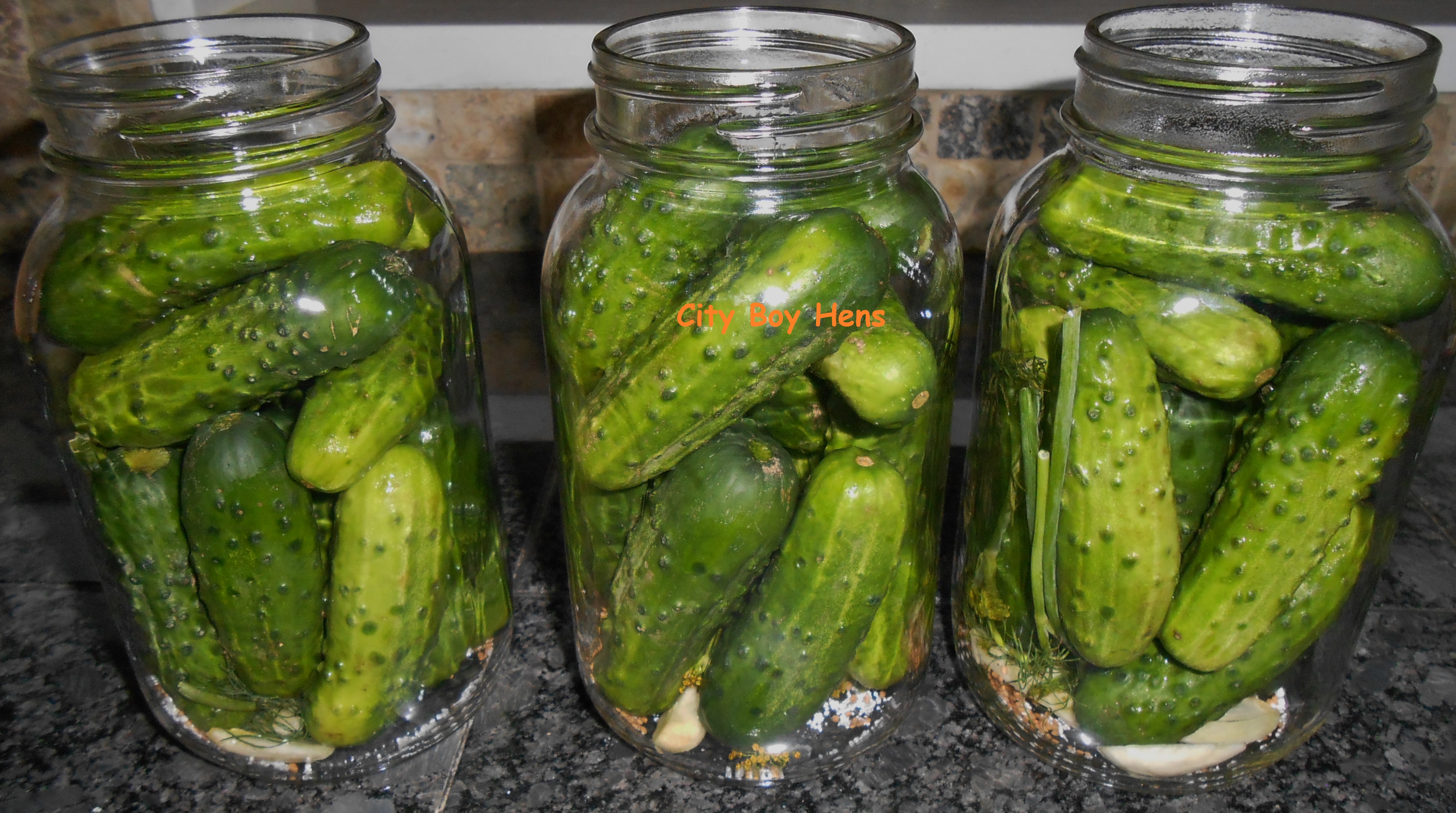
Firmly pack each jar with as many pickles as you can possibly fit into this space.  Look at it as a challenge because you don’t want those pickles to float up to the top of the jar.003

Once packed, pour the brine into each jar using a canning funnel, making sure to leave a 1/4″ head space in each jar.007

Wipe the lip of each jar with a wet paper towel.  This will ensure that no residue is left on the lip of the jar which will prevent a good seal.

Using tongs, place your seals and rings on each jar.

Using canning tongs, carefully place each sealed jar into the canner and process in boiling water for 15 minutes.025

Using the canning tongs, carefully remove each jar from the boiling water and leave to cool on a rack.

Soon you will hear the successful ping of each jar as it seals.  Now tuck those babies away in the cantina or cold cellar until the colder months when you’ll need a reminder of the summer!  If you can’t wait until then……just give 6 weeks to flavor!009

How To Preserve Peaches

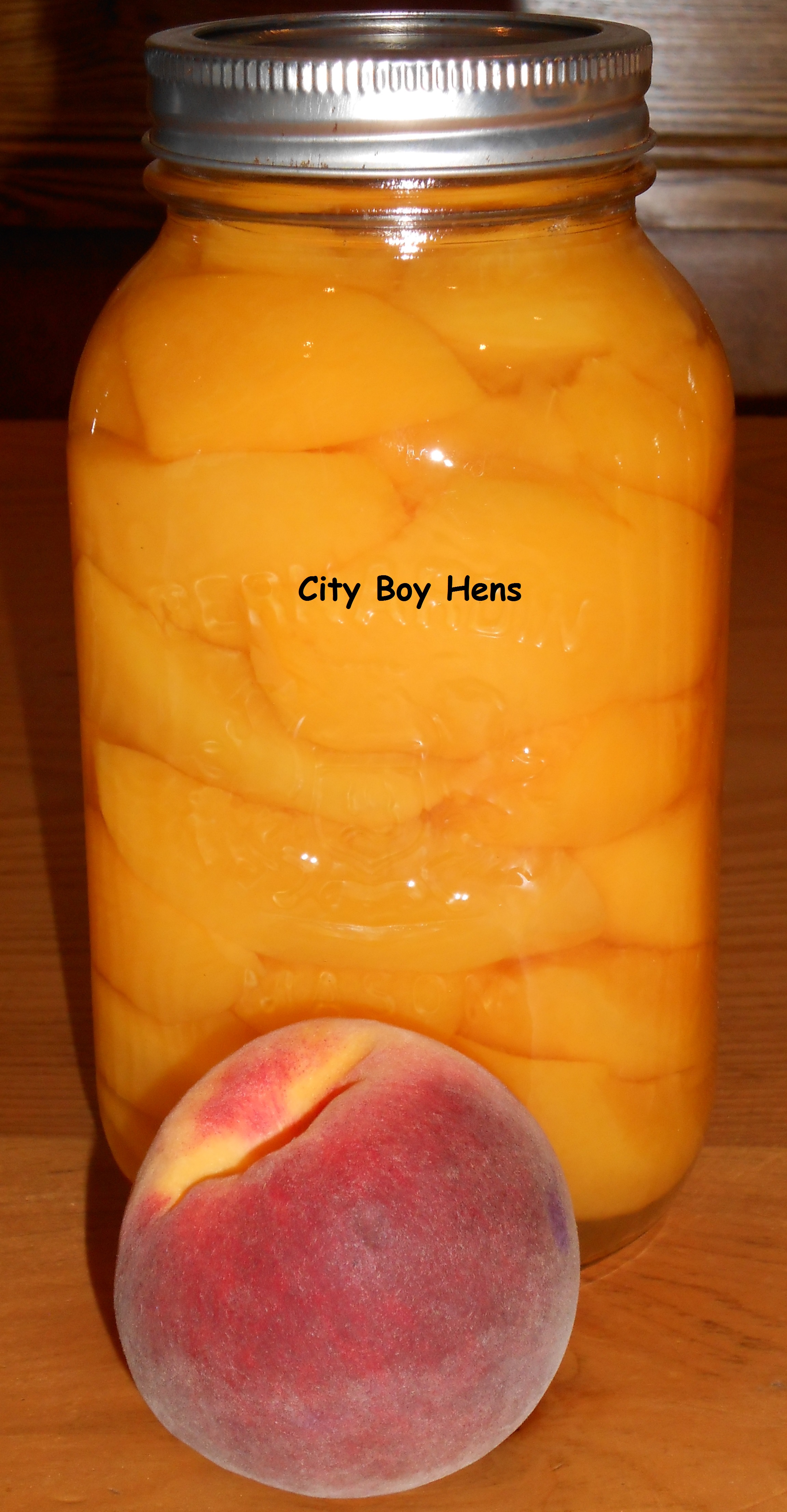
004Ah…the peach……it is said to have originating in China in 1100 BCE. It  became famous in paintings  by the likes of  Caravaggio, Renoir,  Monet & Van Gogh. The characteristics of it”s sweet flesh and soft skin have become notable  in the English language for such sayings as “peach fuzz”,” “peachy keen”, and “life’s a peach”.  It is used as a main ingredient in pies, cobblers, ice-cream, jams & salsa or just eaten fresh off the tree on hot August days!  But most of all…..the peach taste best when canned in August & September and eaten during the Winter months when the temperatures dips down below freezing.  There’s nothing like homemade canned peaches to bring you back to the dog days of summer when there’s a couple of feet of snow out in the yard!

Now….if you like your canned peaches to be mushy and brownish in color, then you should stop reading and go find a site that will give you that terrible information.  But…If you want to eat firm peaches that remain bright in color, than I urge you to keep on reading.

First and foremost, you must use a canning peach for processing.   If you use a free-stone peach, it will turn mushy.  I only use Baby Gold #5 variety for my canning.  Year after year I continue to get great results from these peaches, even after they have been stored in my cantina for well over 12 months.  Secondly, if you want to prevent your peaches from turning brown, they must be immersed in a water bath which contains ascorbic acid.  Now before you freak out, ascorbic acid is a naturally occurring compound that is found in Vitamin C.  Up here in Canada, it is made by Bernardin (USA’s answer to Ball) and goes under the name Fruit Fresh.

So…. if you want to make the Best homemade peaches that will create the WOW factor for your family & guests than you gotta’  make City Boy Peaches…..  Ok…… let’s get started!

This recipe is based on 1/2 bushel (approx.. 50 large peaches) and will yield 11-12 quart jars.

Directions:

Fill your canner up to the required height and begin heating the water.  This will take a  bit of time.

Sterilize your jars in the oven at 225 degrees Fahrenheit  for 10 minutes and continue to keep them warm in the oven until they are needed.004Place canning seals and rings in a small pot and begin to warm them up.005

 Wash, peel and remove any bruises or blemishes from the peach.  The first year that I canned peaches, I tried blanching the peach in order to remove the skin.  This was a complete waste of time which yielded poor and frustrating results.  Give it a try if you don’t believe me, but I promise you’ll go back to the peeler. Blanching  works great for removing the skin off of  very ripe free stone peaches, but it is not suitable for a canning peach.

Once you have removed the skin from a few peaches, it is necessary to cut the peach into wedges in order that it can become immersed in the “fruit fresh” bath.  This will prevent the browning that characterizes so many homemade canned peach recipes..  Because these peaches are “cling-stone”, you will have to work hard to cut away the stone. This step is a huge pain in the butt because it is time consuming, but you will get firm peach wedges for your trade-off with hard work.  Remember….the end result will be great!  During this step, I first cut a small wedge from the peach.  Using a rigid blade knife, I carefully pry the wedge from the stone.  This will expose a part of the stone and I then use a pairing knife to cut segments around the stone.009

010

Keep on repeating this process until you have peeled, cut and pitted about half of the peaches.012

When you want to take a break from cutting up the peaches, begin to make the syrup.  In total, you will use 10 cups of water and 5 cups of granulated sugar.  I divide this in two batches because I do not have a pot that is large enough for this volume.  Begin heating the mixture and occasionally stirring until the sugar is dissolved.

Once the syrup begins to boil, begin putting the drained peaches into the pot.  A metal basket spoon works great for this job. Keep the peaches in the boiling syrup for 3 minutes.

Using a canning funnel, begin putting the peaches into your sterilized jars. 017 Add syrup, leaving 1/2 inch head space.  Using a nonmetallic utensil, remove air bubbles and adjust head space, if required. 021

Wipe jar lid in order to ensure that no syrup is left on the lip of the jar.  This will prevent your jars from sealing correctly.

Center hot sealing disk on your jar and tightly screw band ring down.

Using canning tongs, place your jars in the canner and process for 20 minutes.022Carefully remove your jars from the canner and let them cool on a rack for 24 hours.  Soon, you will hear the “pop” of success as those jars of delicious peaches seal up and ensure a safely canned product.

Now…tuck those babies in the cantina or cold cellar and wait for those cold winter days when you will need a reminder of the dog days of summer!027

Oh…I almost forgot………..keep the peels for the compost and the pits for the chickens!024

Bread & Butter Pickles

015From what I have read, Bread & Butter Pickles originated in the Great Depression.  Since times were tough and meat was a luxury, thrifty folks came up with tasty alternatives for sandwich fillers.  On of these alternatives was the cucumber.   This vegetable was easy to grow and was successfully pickled so that it could be enjoyed in the non-growing seasons.  So….maybe the name came about  something like this…… “Hey Ester, what are we havin’ for lunch?”, said Wilbur.  “Well, since you ain’t got no job and you lost the pig in that card game…….all’s I got in the cellar are some sweet pickles from last summer.   Be happy that you got two slices of bread and a bit of butter to go with it.  Now eat that pickle sandwich before I take this skillet to your head!”    “Mmmmmmmm, said Wilbur.  That’s a mighty tasty sandwich.”  “Hey Ester, whad’ you call these there pickles you got in this here sandwich?”……  “I don’t know, you old coot.  Call’em whatever you want”. Well, in that case, I’m gonna’ call “em Bread & Butter Pickles!”……….And that’s how these pickles got their name.  Well….that’s the story I’m sticking with!

These pickles are easy to make and follow the general canning guidelines of most pickles.

Makes 5 Pint (500ml) jars.

Ingredients:

3 lbs. pickling cucumbers

3 medium onions, thinly sliced

1/2 cup  pickling salt (Don’t use table salt.  It will cloud your liquid and turn your pickles to an unpleasant color.)

6 cups cold water

3 cups cider vinegar

2 cups firmly packed brown sugar

2 tbsp.  mustard seed

1 tsp. celery seed

1 tsp. ground cloves

1 tsp.  turmeric

Directions:

001Weigh, wash and gently scrub all cucumbers.  Discard any cucumbers that appear spoiled.

002Cut approximately 1/4″ off of each end of the cucumber.  It is essential that you cut  the blossom end (not stem) because there is an enzyme at this end which will make your pickles turn mushy and possibly unsafe to eat.  The blossom end is located on the left side in the above picture.

Cut your cucumbers into 1/4″ slices and place them in a large bowl.

Thinly slice 3 onions and place them in the same bowl.

Add pickling salt to the water and stir until dissolved.  This make take a bit of stirring because the salt will not dissolve as readily in cold water.  Add the solution to your cucumbers and onions  and let it rest for 2 hours.  I occasionally give it a stir during this time period.004

With about a half an hour left of brining, fill your canner up with water about 2 inches higher than the height of your jars and bring the water to a boil.  This will take a bit of time.

Sterilize your jars in the oven at 225 degrees Fahrenheit  for 10 minutes and continue to keep them warm in the oven until they are needed.003

Place canning seals and rings in a small pot and begin to warm them up.005

In the mean time, add brown sugar, cider vinegar and spices into a large pot and bring to a boil.  Stir occasionally.006

Once the 2 hours of brining is completed, drain the cucumbers and onions into a colander.  Fill the bowl with fresh water and rinse again.

Put the drained cucumber and onion mixture into your large simmering pot and bring the ingredients up to a boil.

Using a canning funnel, pack your mixture into your canning jars, leaving 1/2″ head space.  I found it easier to fill all the jars first with the “solids” and then distribute the liquid after.012

014  Using a non-metalic utensil, remove the air bubbles from the jar.  Add more liquid to the 1/2″ head space level if required.

Wipe the lip of each jar with a wet paper towel.  This will ensure that no residue is left on the lip of the jar which will prevent a good seal.

Using tongs, place your seals and rings on each jar.

Using canning tongs, carefully place each sealed jar into the canner and process in boiling water for 10 minutes.025

Using the canning tongs, carefully remove each jar from the boiling water and leave to cool on a rack.

Soon you will hear the successful ping of each jar as it seals.  Now tuck those babies away in the cantina or cold cellar until the colder months when you’ll need a reminder of the summer!  If you can’t wait until then……just give them a few days to flavor!023

Cherries in Vodka

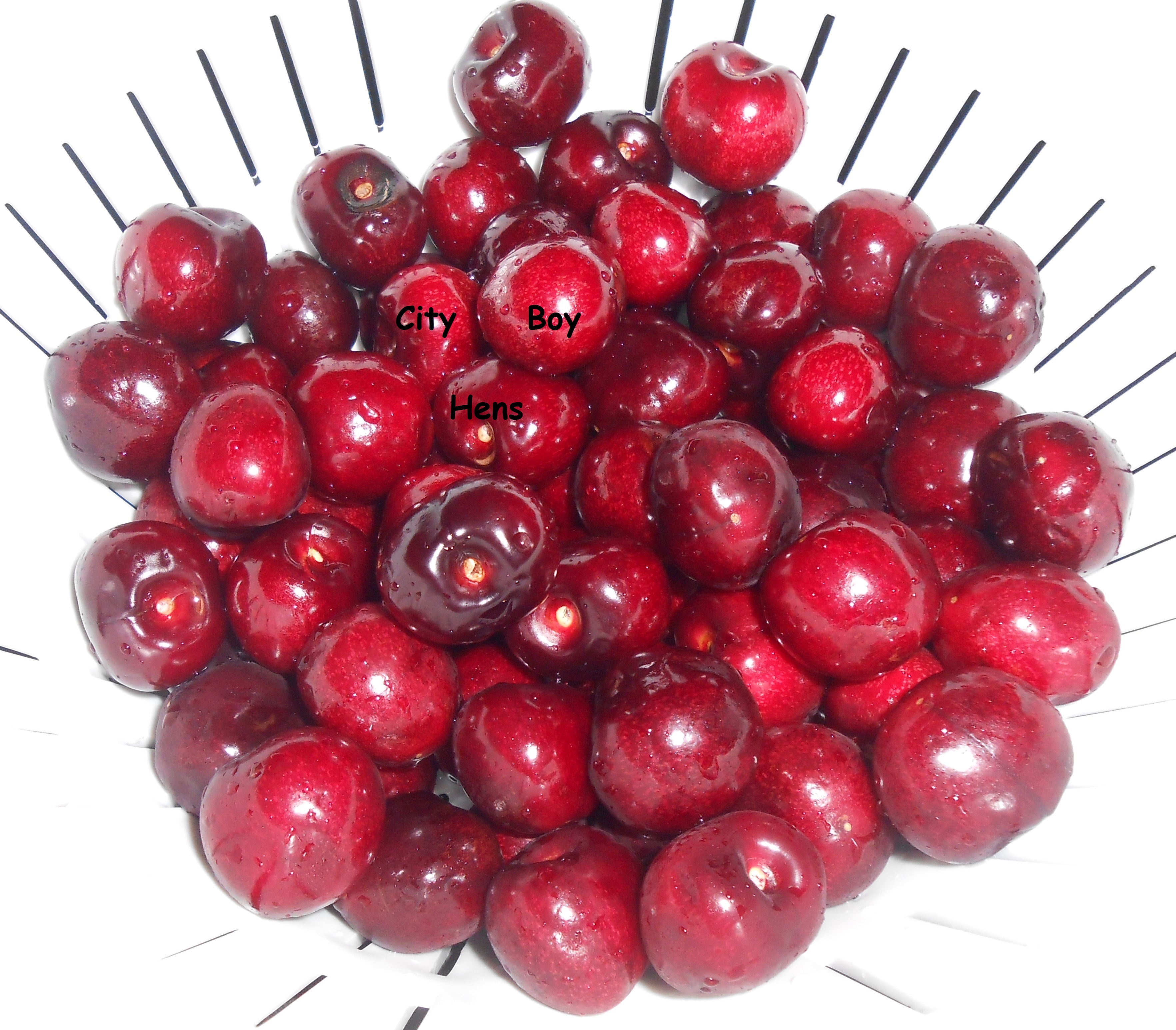
009Ontario cherries are now  at farmer’s markets.  They are great to eat fresh and even better to jar for the winter in some vodka.  I’ve been making these flavored cherries for a few years and they are always a great companion to dessert on  special occasions.  We always wait until Christmas Eve to  open the first jar from the previous summer and share it amongst the adults at our table.  You are going to be AMAZED at the sweetness in the vodka.  In fact it tastes like a sweet cherry juice with a hint of vodka, minus the harsher alcohol taste of vodka “straight up”.    Just be carfeull………it may be hard to stop wanting more and NO……This DOESN’T count towards a serving of fruit!

First, wash and remove the stems from your cherries.  Discard any bruised or blemished fruit.012

Using a canning funnel (just because it’s easier), drop your cherries into a clean mason jar.014

Firmy pack as many cherries as you can into the jar without smashing up the fruit.016

Fill the jar with vodka, leaving a 1/4″ headspace.  Seal up the jar.  Note:  There is no need to sterilize the jar because the vodka will act as a preservative for the fruit.019

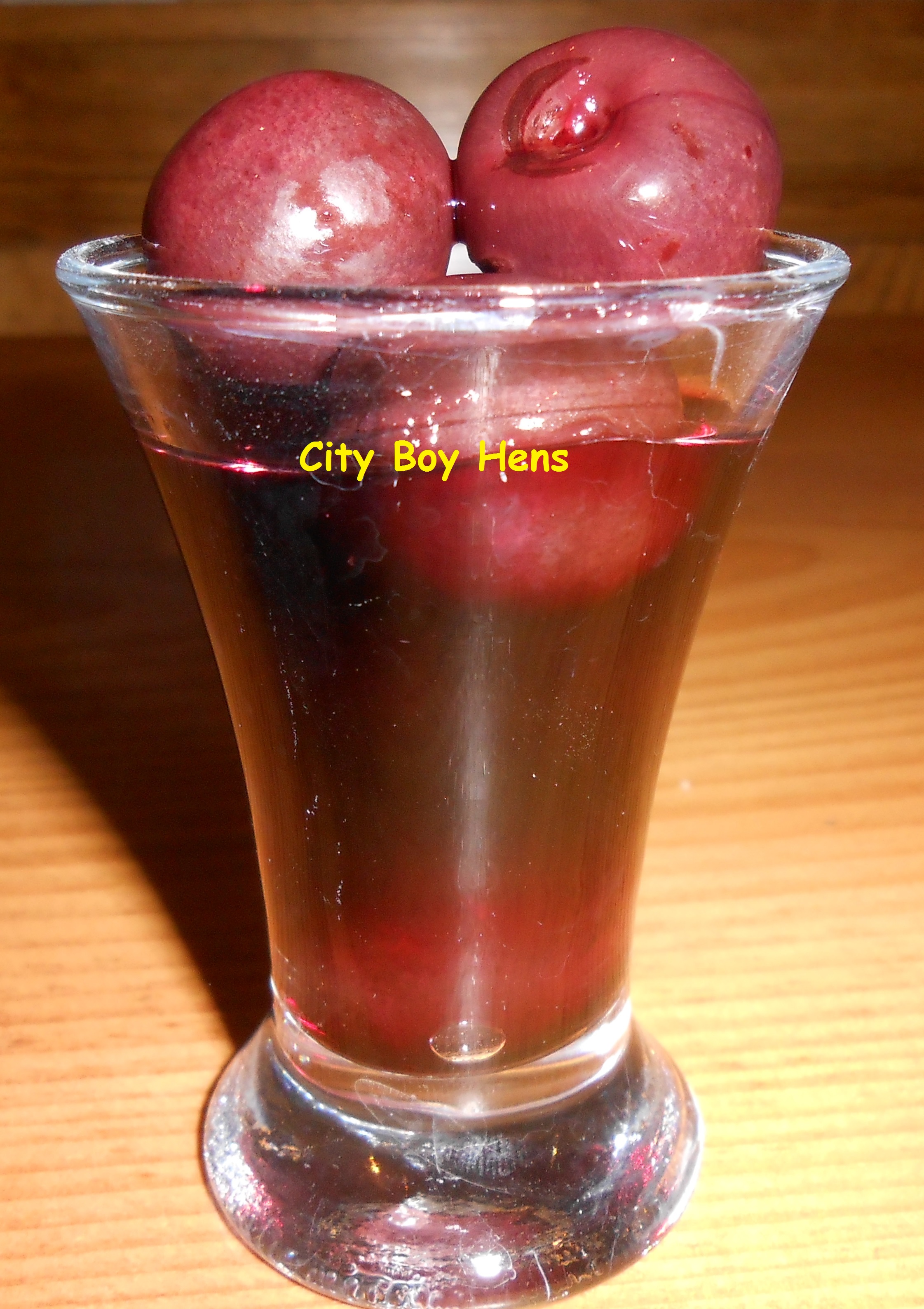
Now, put it aside in your cantina or cold cellar and WAIT!  You have to give those babies at least 4 months to flavor the vodka.  You will know that the cherries are ready when the vodka turns a deep dark red.020

Serve 3-4 cherries in a liqueur glass with a toothpick.  Your family & friends are going to love them!  Enjoy responsibly!004

Making Blueberry Jam

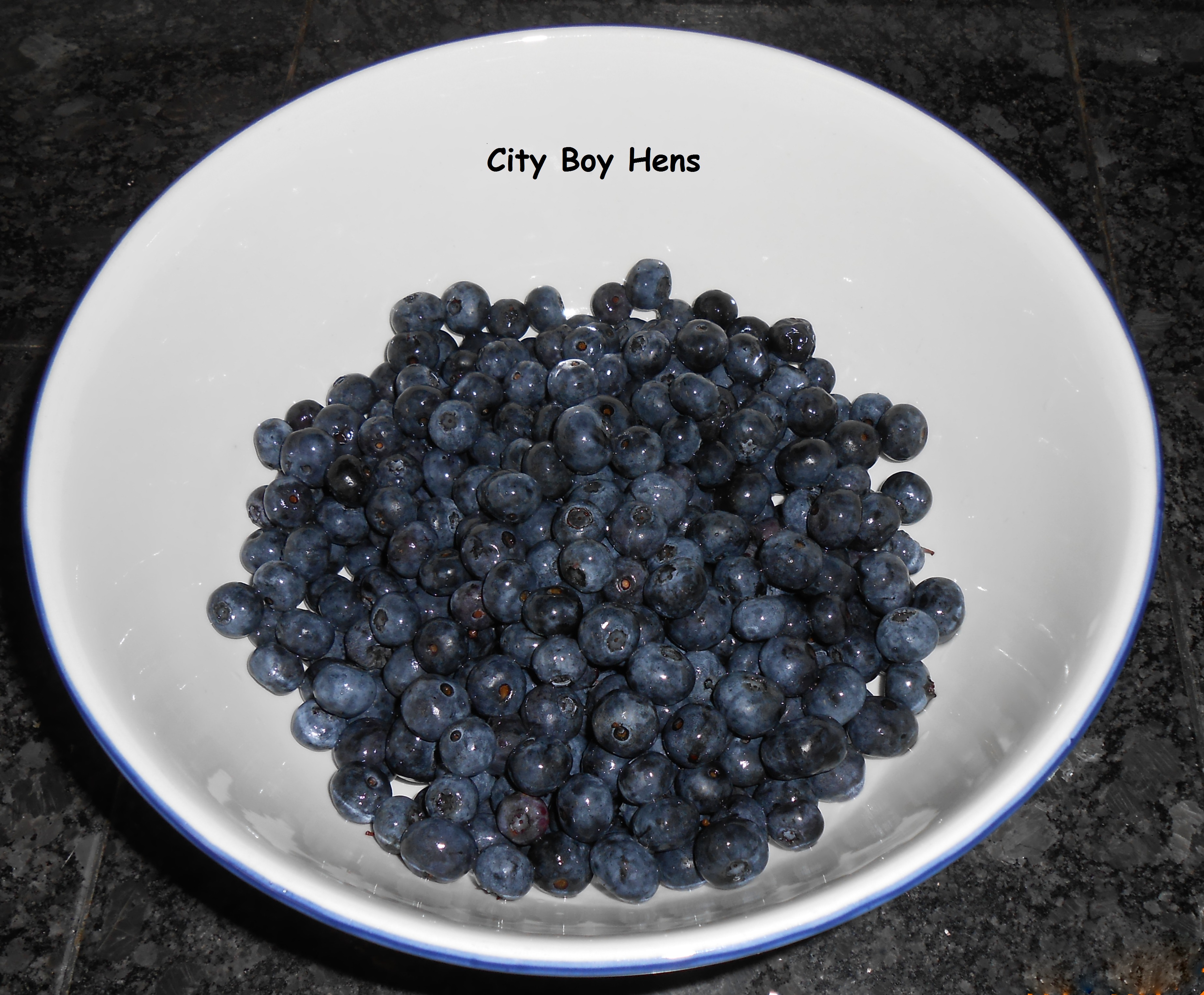
101As far as I’m concerned, Blueberry Jam is definitely one of the great tastes of summer.  My kids enjoy it on a peanut butter sandwich or as a decadent topping on pancakes.  It’s also a great reminder of those warmer days when we are in the throes of those Winter months.  Like all jams, it’s easy to make and great to share!

Ingredients

8 cups crushed berries

10 cups sugar

4 Tablespoons lemon juice

2 packages of pectin (57 g /2 oz.)

Yields 14 -250 ml (8.4 oz. or half pint) jars of jam

Note:  Make this jam in two separate batches.

Directions for 7 jars of jam

Fill your canner up with hot water to the height of the jars that you will be using for your jam. It will take a while to get this volume to a boil so you better start now.  If you get ahead of the game, you can always turn it down later.

005

Fill a medium pot with water and add the seals and screw rings.  Bring this to a gentle bowl.

Sterilize your jars in the oven at 225 degrees fahrenheit  for 10 minutes.  Continue to keep them warm in the oven until they are needed.

003

001

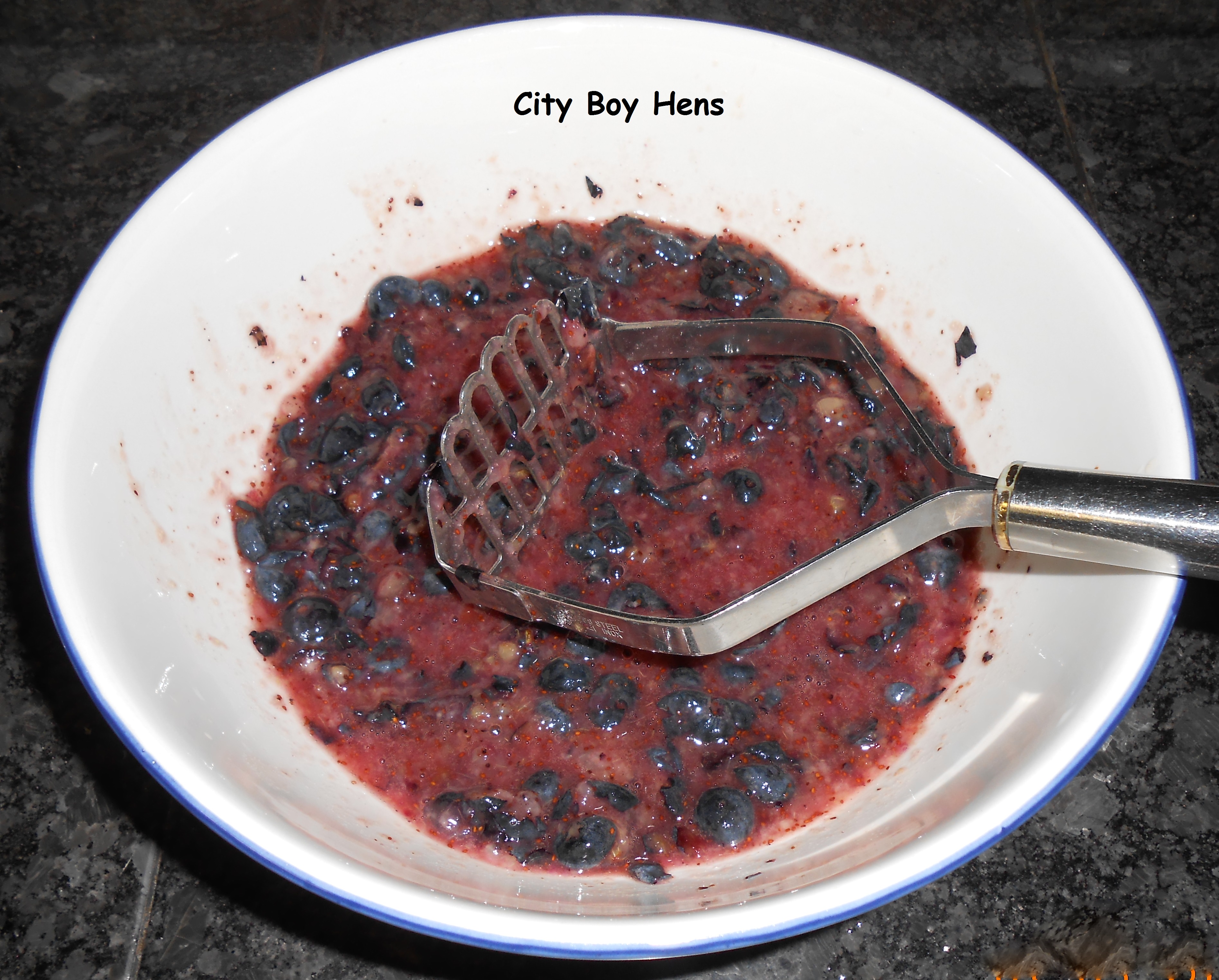
Mash the berries up in a large bowl.  If you like your jam to be more “chunky”, then decrease the amount of mashing.

002

Combine mashed berries and pectin in a large pot and bring to a boil over high heat.

Add all the sugar.  I add 1/3 at a time and stir in order to dissolve all the sugar and not have it stick to the bottom.

005

006

Note:  Make sure you use a LARGE pot to make this jam.  The volume will really INCREASE when the jam begins to boil.  The last thing you will want is to have this sugary mixture bubble over the pot and catch FIRE on your burner.  Been there and done that!

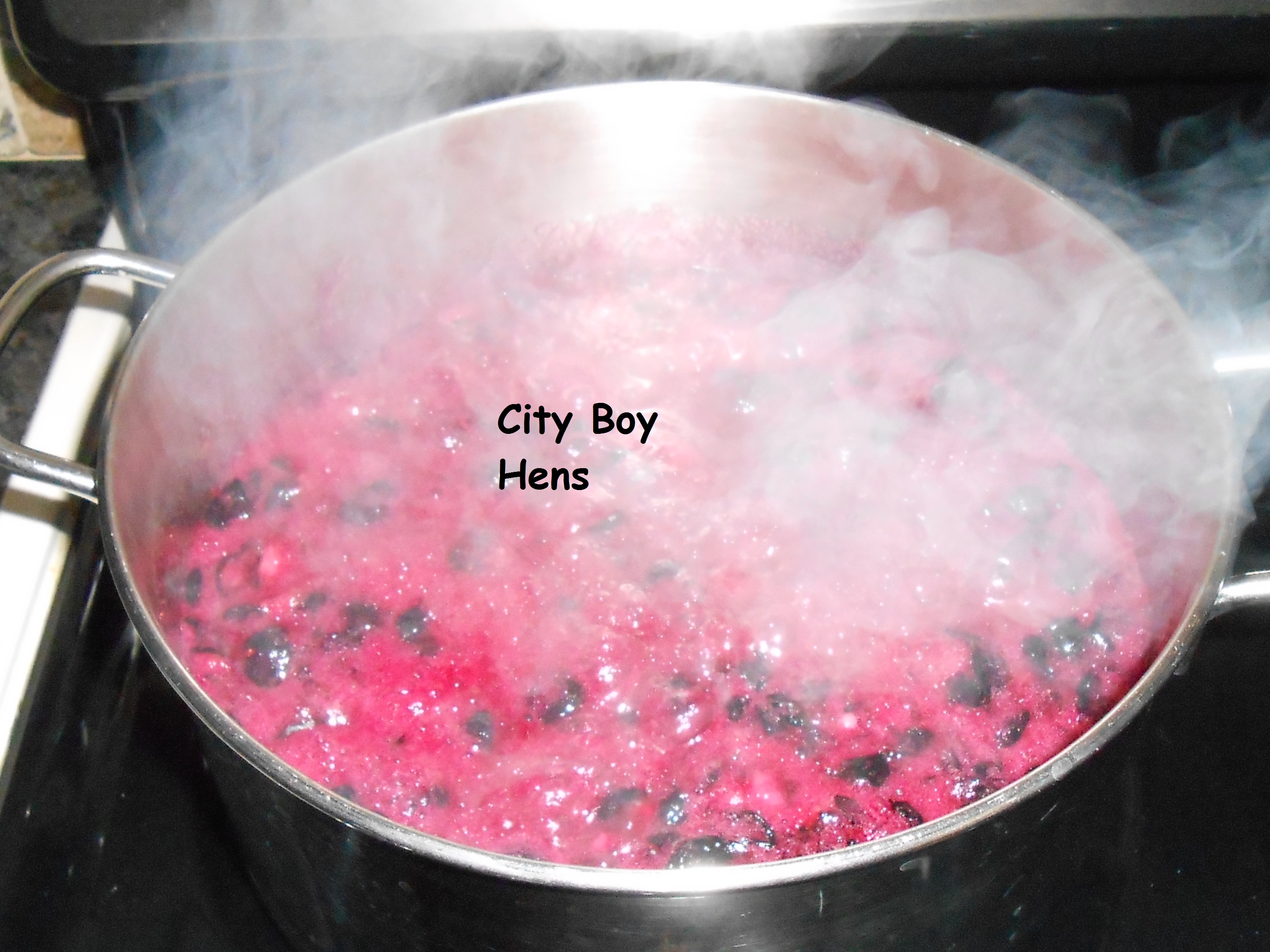
Once the sugar is dissolved, return to a hard boil for 1 minute.

Remove from heat. Stir and skim for 5 minutes.  This step is crucial in order to get a foam free jam (skimming part) that doesn’t have the fruit rising to the top of the jar (stirring part).

008Pour jam into warm sterilized jars to 1/4″ from rim.

Wipe the lip of the jar with a wet paper towel in order to ensure that no jam is on the rim of the jar.  This could prevent a good seal from happening.  Cover with sterilized lids and tighten the screw rings.

010

Process in a water bath for 10 minutes. Carefully remove the jars with canning tongs and cool on a rack over night.  Soon you will hear the sound of success as those lids start popping and ensuring a good seal.

025Congratulations!  Try not to eat it all in the next few months.  Save some for the Winter when you will need a few reminders of summer!

097

Making Strawberry Jam

032Farm fresh strawberries are finally ready to harvest in Southern Ontario.  With that said, it’s time to make some jam.  But, let’s be honest….it does not qualify as a serving of fruit in your daily diet.  As I remind my kids, now and then on  biscuits, pancakes or toast,  accompanied with peanut butter on some bread, or as a topping on ice cream, strawberry jam is a great addition to a snack or meal.  Not to mention that its flavor is a great reminder of summer when it’s minus 20 degrees in February!

Ingredients

4 quarts strawberries (9 cups crushed berries)

14 cups sugar

2 packages of pectin (57 g /2 oz.)

Yields 16 -250 ml (8.4 oz. or half pint) jars of jam

Note:  Make this jam in two separate batches.

Directions for 8 jars of jam

Fill your canner up with hot water to the height of the jars that you will be using for your jam. It will take a while to get this volume to a boil so you better start now.  If you get ahead of the game, you can always turn it down later.

Fill a medium pot with water and add the seals and screw rings.  Bring this to a gentle bowl.005

Sterilize your jars in the oven at 225 degrees fahrenheit  for 10 minutes.  Continue to keep them warm in the oven until they are needed.

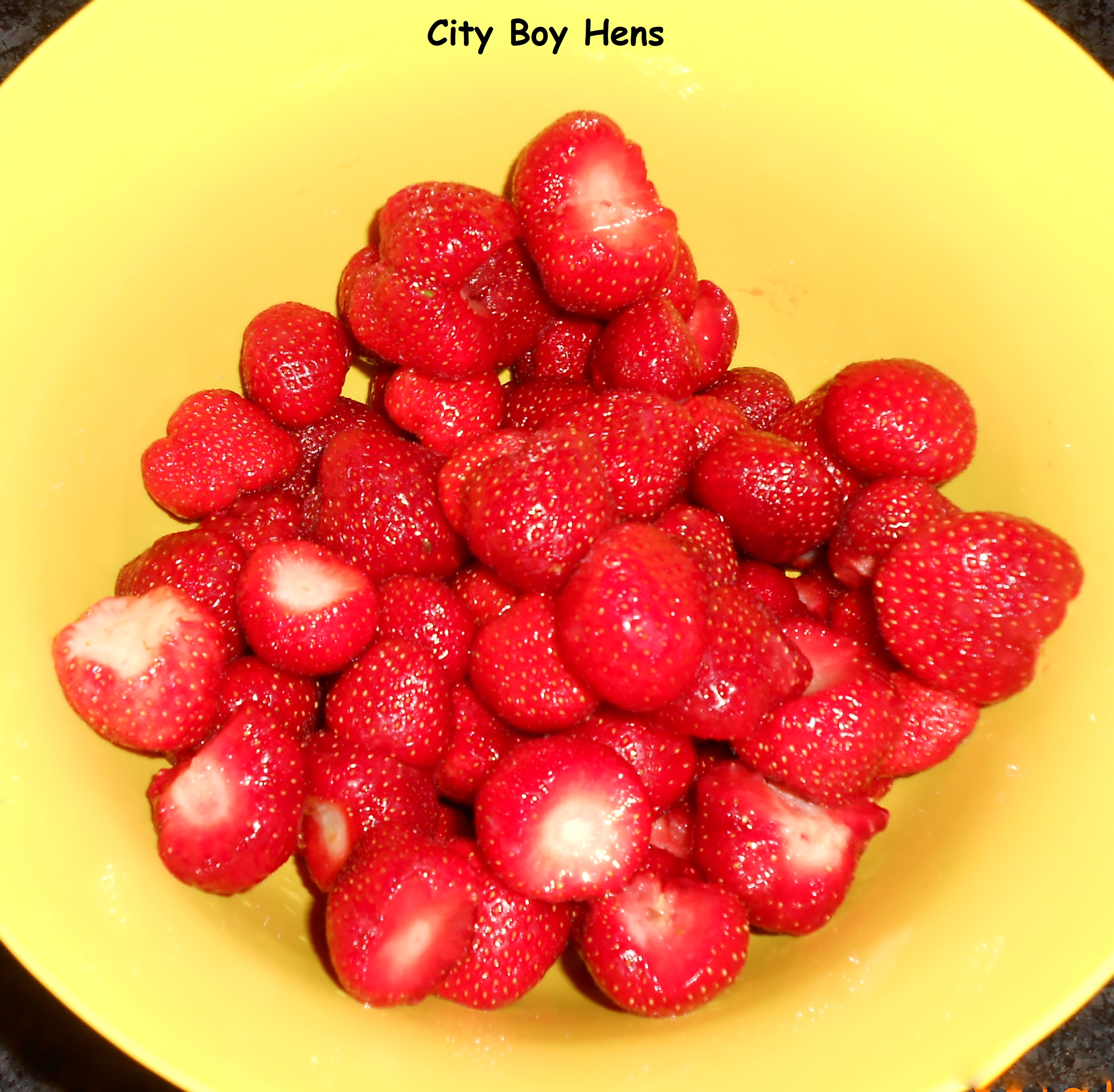
011Wash and remove the hull from 2 quarts of strawberries.012

Mash the berries up in a large bowl.  If you like your jam to be more “chunky”, then decrease the amount of mashing.

Combine mashed berries and pectin in a large pot and bring to a boil over high heat.

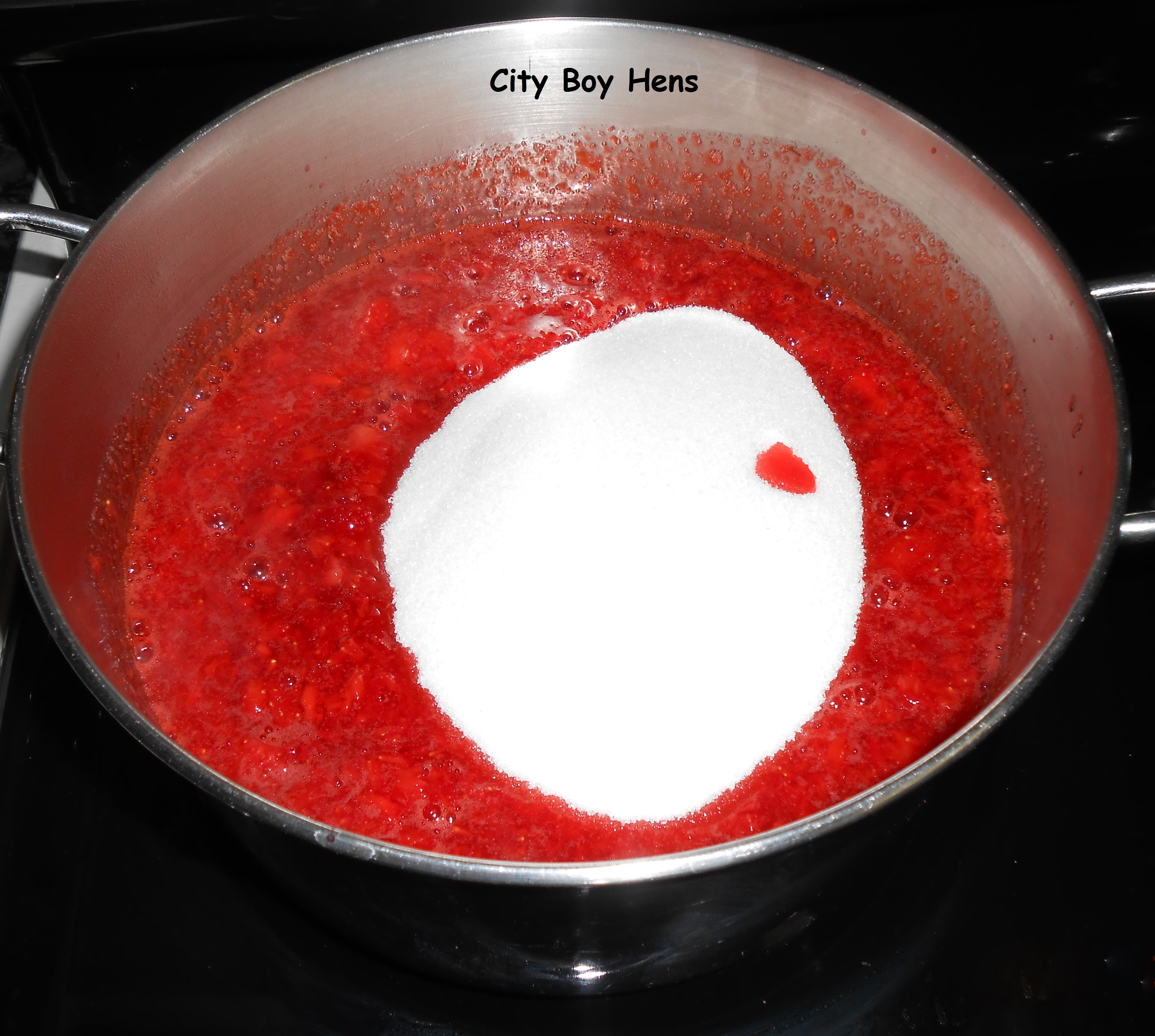
Add all the sugar.  I add 1/3 at a time and stir in order to dissolve all the sugar and not have it stick to the bottom.014

Note:  Make sure you use a LARGE pot to make this jam.  The volume will really INCREASE when the jam begins to boil.  The last thing you are going to want to happen is have this sugary mixture bubble over in the pot and catch FIRE on your burner.  Been there and done that!

Once the sugar is dissolved, return to a hard boil for 1 minute.

Remove from heat. Stir and skim for 5 minutes.  This step is crucial in order to get a foam free jam (skimming part) that doesn’t have the fruit rising to the top of the jar (stirring part).028

020

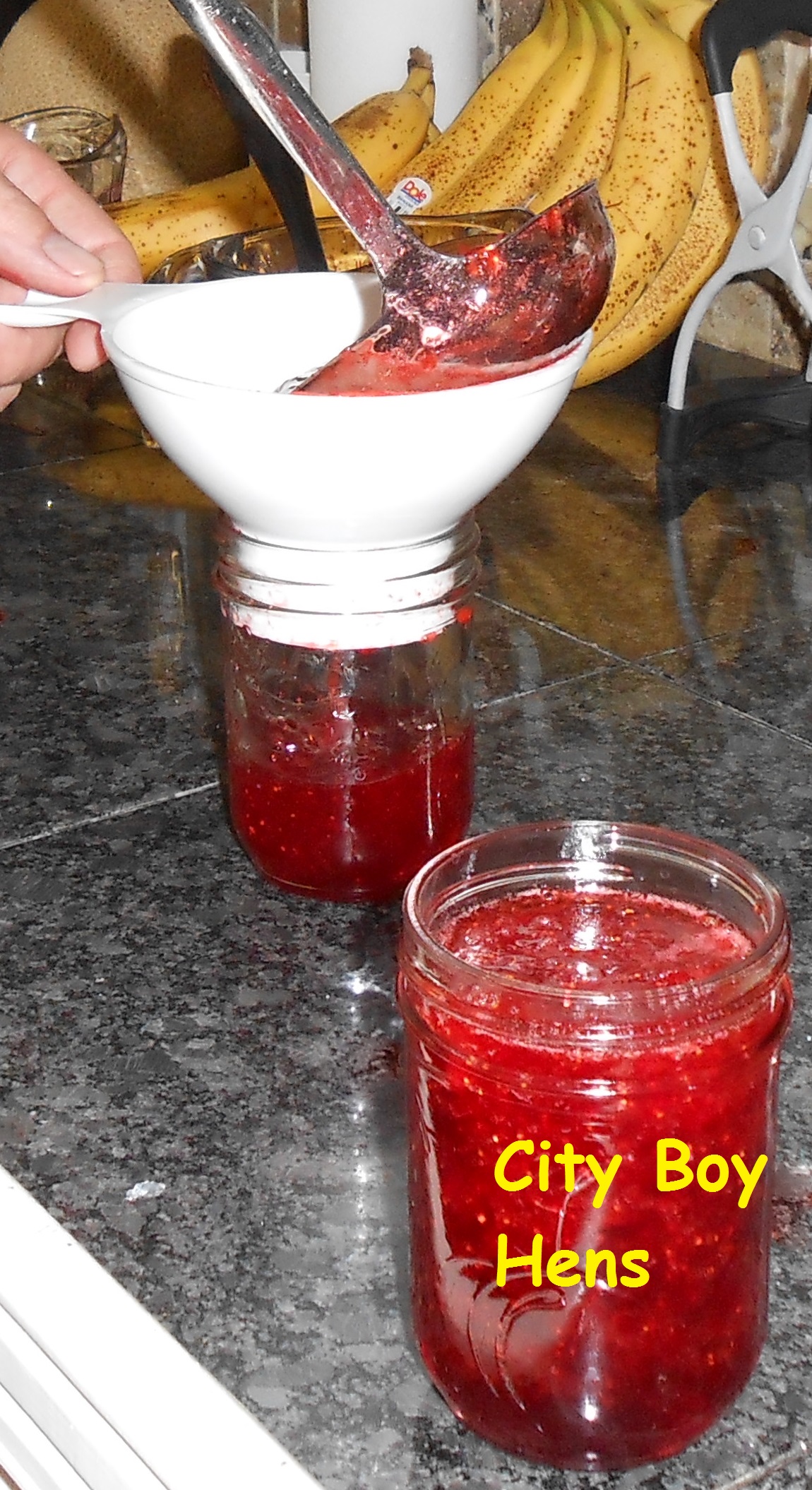
Pour jam into warm sterilized jars to 1/4″ from rim.021

Wipe the lip of the jar with a wet paper towel in order to ensure that no jam is on the rim of the jar.  This could prevent a good seal from happening.  Cover with sterilized lids and tighten the screw rings.

Process in a water bath for 10 minutes. Carefully remove the jars with canning tongs and cool on a rack over night.  Soon you will hear the sound of success as those lids start popping and ensuring a good seal.025

Congratulations!  Try not to eat it all in the next few months.  Save some for the Winter when you will need a few reminders of summer!031

City Boy Granola

027Ya..I know that granola has been popular for a long time.  I can even remember as a kid when it became a breakfast cereal and I begged my parents to buy it in the grocery store which, by the way,  never happened.  So I might be a bit behind the curve in writing about granola, but I thought I would share my City Boy Hens Granola Recipe with you.  Around here we’ve all been eating oatmeal lately for breakfast and granola makes a great topping to a somewhat bland and boring breakfast.

Ingredients

008

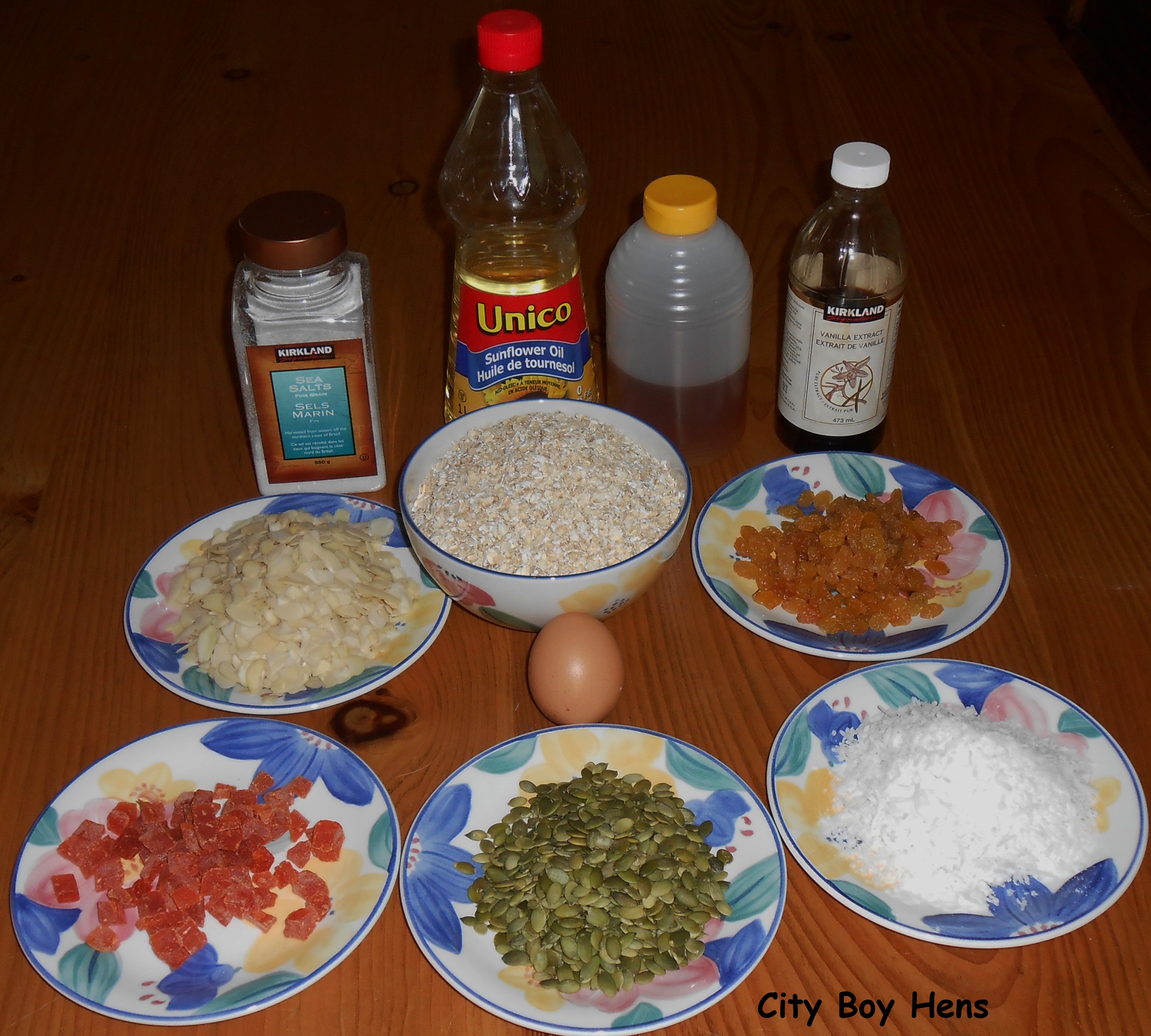
3 1/2 cups  rolled oats (I use “quick” oats)

1 cup  sliced almonds

1 cup  shelled pumpkin seeds

1  cup of shredded coconut

1 cup  raisins

1 cup dried and cubed papaya

1/2 teaspoon  sea salt

1/2 cup  honey

1/4 cup  sunflower oil

1 teaspoon  vanilla extract

1 egg white

Note:  Feel free to omit or substitute different ingredients.

Directions

Combine oats,  almonds, pumpkin seeds, and coconut together in a large mixing bowl.  Add salt and stir the dry ingredients together.

In a separate bowl, combine the oil, honey, egg white and vanilla extract.  Note:  Add the oil first.  This will help prevent the honey from sticking to your bowl.  Add these wet ingredients to your dry ingredients and continue to stir until everything is nicely coated.010

Spoon the granola out of the bowl onto 2 baking sheets and place in the oven for 45 minutes at 300 degrees Ferinheight.011

Remove the baking sheets from the oven every 15 minutes in order to stir the granola.

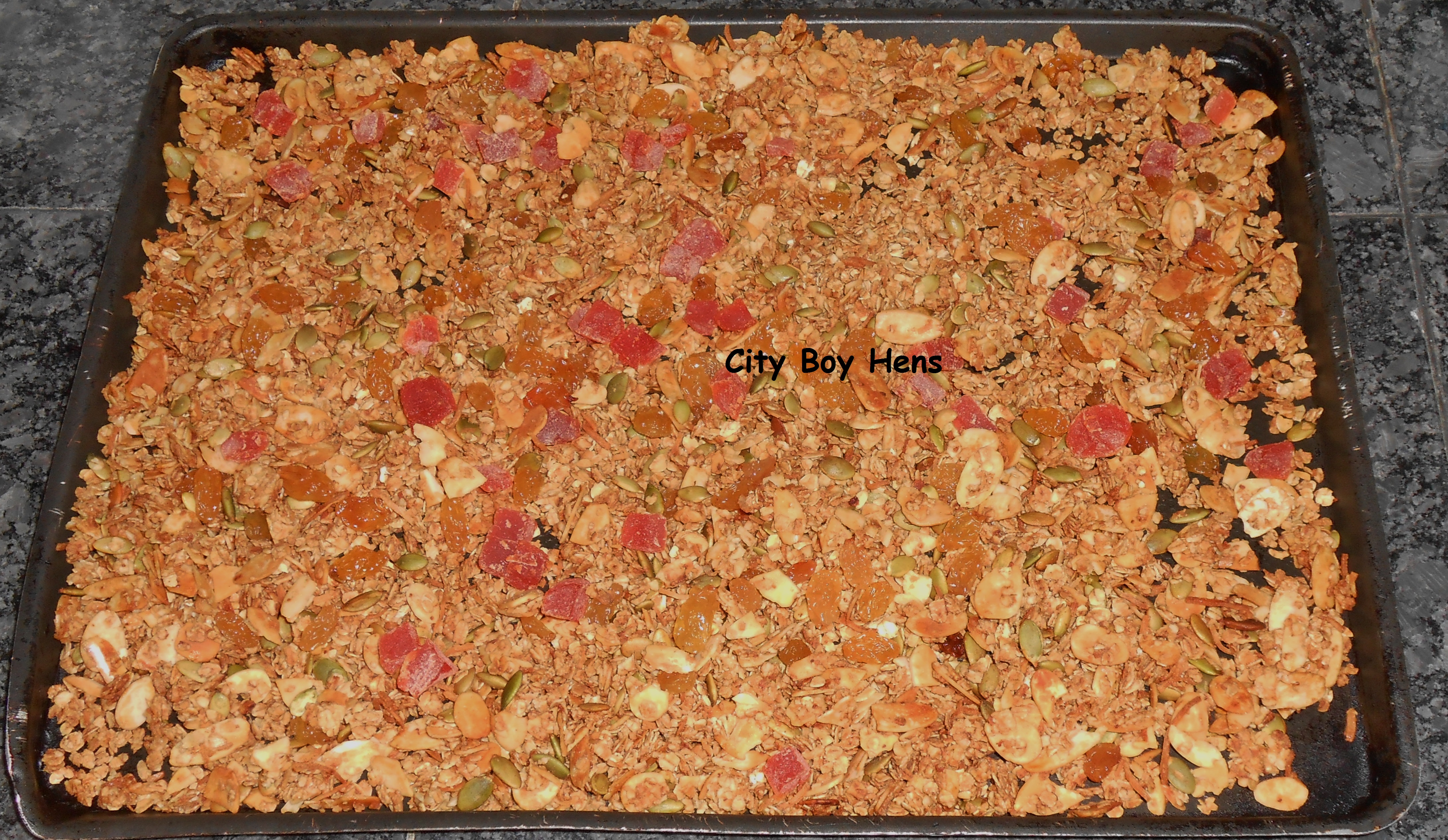
After 45 minutes, the granola should be light brown and smell incredible.  Pull the baking sheets out and add the raisins and dried fruit.  Put the granola back in the oven for 5 minutes.  Note:  If you were to bake the raisins and dried fruit for the entire duration of time, they would be incredible hard and/or burnt. 017

Remove from oven, cool, and pack into 2 mason jars. 027Enjoy as a quick snack or as a topping on oatmeal, yogurt, or…………..

034